Jeff Medhurst (An Author Spotlight Interview - November 2025)
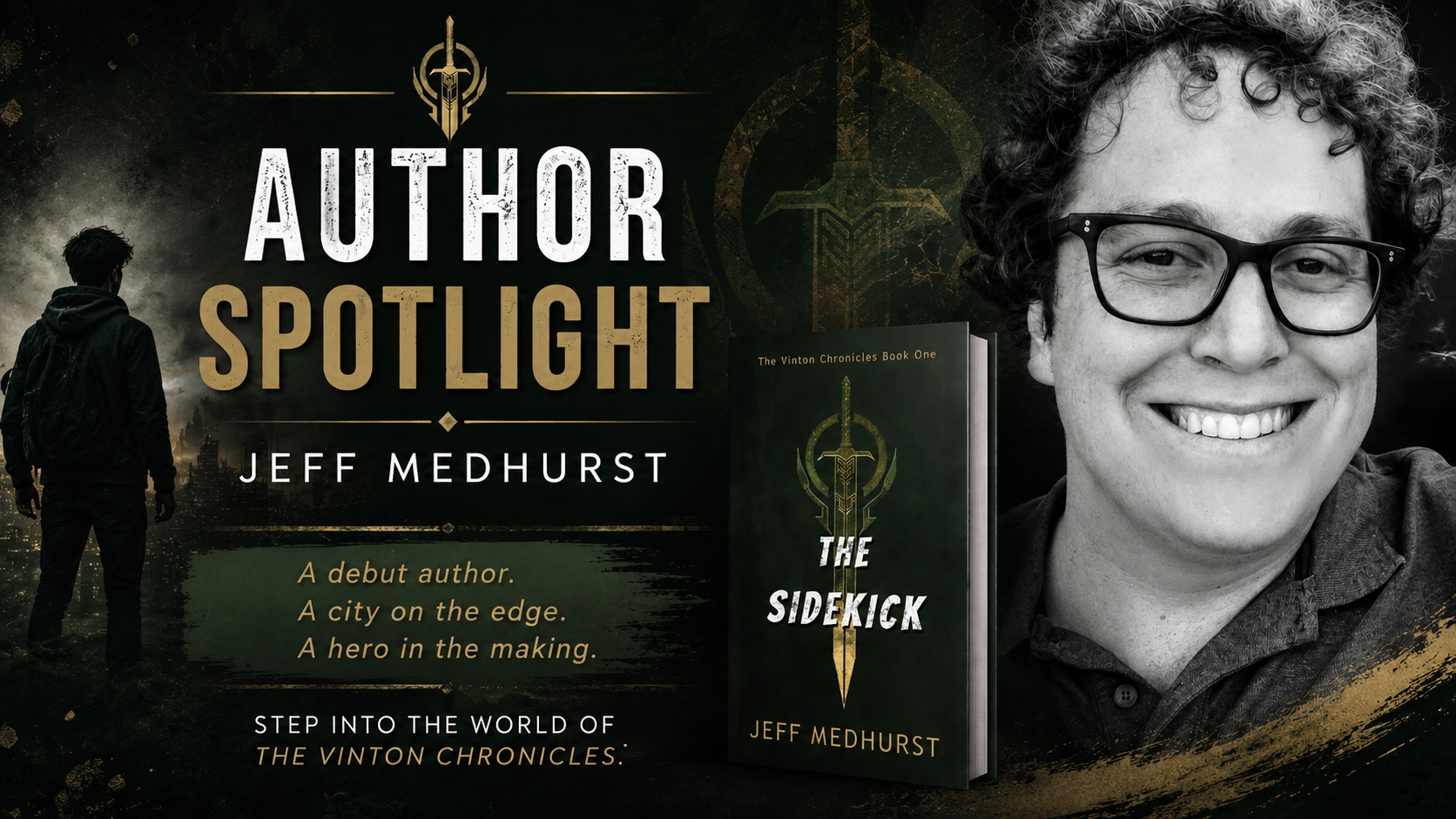
As the lights of Vinton flicker and the line between hero and villain begins to blur, debut author Jeff Medhurst steps into the literary arena with The Sidekick, book one in The Vinton Chronicles. A fast-paced, emotionally charged YA superhero novel, it explores identity, loyalty, and the true cost of courage in a city built on secrets. Medhurst brings cinematic flair to the page, blending heart-pounding action with the emotional depth of a coming-of-age story set against a backdrop of corruption, friendship, and hope.
A teacher, journalist, and storyteller at heart, Medhurst channels his lifelong love of comics and storytelling into a series that redefines what it means to be a hero. His writing carries echoes of R.A. Salvatore and Jim Butcher, laced with the rhythm of comic-book storytelling and the sincerity of someone who still believes in doing the right thing—even when it’s hard.
In this exclusive Author Spotlight, Jeff opens up about the early classroom moments that sparked his creative journey, the role of music in his writing process, and how he finds balance between teaching, fatherhood, and crafting a world readers will want to return to again and again. Honest, energetic, and full of heart, The Sidekick marks the beginning of an exciting new superhero saga where every legend has to start somewhere—and sometimes, it begins with the sidekick.
Join us as we dive into the imagination, drive, and creative spark behind The Sidekick and discover how Jeff Medhurst turns heroism, heart, and humanity into an unforgettable new chapter of YA superhero fiction.
1. Can you tell us a bit about yourself and your journey as a writer?
I often like to say that I am a father and husband first, a teacher second, and now an author third, which has honestly been pretty fun to think about. My life really does revolve around my family, which is the greatest joy I can think of, and then I love being a teacher. Writing is a very close third though, and has been the most persistent part of my life. My journey as a writer started as far back as elementary school, and continued through my first degree as a journalist. However, I’ve been creative writing since high school and slowly chipping away at what would eventually become The Vinton Chronicles, so after an interview with an author for my class inspired me, I finally sent in The Sidekick to Wicked Ink. The rest has been an incredible rollercoaster ride since!
2. What inspired you to start writing, and how did you discover your passion for storytelling?
When I was a little kid, my best friend and I used to create these little picture books that my mom stapled together, and the first time it blew my mind; you mean I could assemble these random, chaotic thoughts into something resembling a book?! Then in the third grade, my teacher would take our completed short stories and she would laminate them and coil bind them. After we read them to the class, they would go up in the classroom library, like a real book. I think the idea of having a completed, finished project was something I was really drawn to, something that I had total control over and could share with others.
Now I had been told I was a good writer many times by teachers and my parents, but I think the real passion for storytelling and why I’ve been creatively writing for over half my life came in high school. Bored one night, I decided to try my hand at writing something short and silly for Facebook. It was not a well told story, but the reaction was huge. Lots of my friends got a kick out of how silly it was, and it kind of pushed me to keep writing. Over time, after realizing I really enjoyed writing, I began plotting out The Vinton Chronicles.
Long answer to a short question, but I think my passion for storytelling really can be traced all the way back to just being able to share my stories. If I have a story to tell, I want to tell as many people as possible.
3. Could you share some insights into your creative process? Do you have any rituals or habits that help you write?
My creative process is pretty driven by music. I’m a big fan of instrumentals and musical scores from movies and video games, Typically speaking once I have finished a movie or video game, if I found the music really impactful I’ll listen to the soundtrack on its own, and often times I see what kind of scenes come to mind that I had already planned to write that the music will fit. Or sometimes I will become inspired to write a brand new scene based on a track. Either way, I’ll add the music to a playlist and when it's time to write those scenes I’ll often toss that music on loop until I’m done writing that particular scene. Nine times out of ten, it helps me get into the mood to write.
4. What themes or messages do you often explore in your writing, and why are they important to you?
I’m a big fan of good vs evil themes in my stories, but learning the world is never so simple is what I’ve really enjoyed digging into with my themes and messaging. Not to be too political, but seeing how divided North America is in general right now has made me confront big ideas about what is ‘right’ and ‘wrong’ and how we perceive people on the other side of the argument. But, at the end of the day I want my stories to feel satisfying and for our heroes to feel like heroes to aspire to. So oftentimes the big themes I’m reaching for revolve around being willing to learn and listen, while still staying true to the core of who you are.
5. Are there any particular authors or books that have influenced your writing style or storytelling approach?
For my writing style, I probably borrow most heavily from R.A. Salvatore, as it was his writing I obsessively read during my formative writing years throughout Junior High and High School, and I still keep up with today. I think my voice is also heavily influenced by Jim Butcher’s Dresden Files and the original run of Ultimate Spider-Man by Brian Michael Bendis and Mark Bagley, as both stories have a bit of a forward presenting lighthearted tone with a hidden weight just below the surface that keep the stories rooted in reality.
As for my storytelling approach, I’ve definitely been most heavily influenced by comic books and graphic novels with their episodic approach to serialized storytelling. I like the feeling of a status quo being present, because I find stories can most often impact or be disruptive when a status quo is thrown into disarray. And so when I look at how I want to pace my storytelling I use comics as kind of a guideline for creating my stories' highs and lows to generate that status quo.
6. Do you have any advice for aspiring writers who are just starting their journey?
I can only speak from my experience, but I think the most important thing is you have to make sure it's fun for you. It’s definitely not the only thing you need, but if you don’t enjoy the practice of sitting down, cranking out thousands of words, and then the exhale of release once you’re done, then I don’t know if writing is for you or not. I think the second biggest piece of advice I can offer is this: write what you want to read. This may sound self-indulgent, but I love reading my writing. When I think of my work as a writer, I’m often far too critical of it or even dismissive as I compare it to other writers. But when I sit down to read my writing as a reader; I often have moments where I go ‘this is awesome!’ Because I genuinely like the story being told and how it's being told, which if nothing else is my end goal. So I guess to sum up these two pieces of advice, whatever your end goal with writing is, make sure in some capacity you are also doing it for yourself.
7. How do you balance writing with other aspects of your life, such as work, family, and personal interests?
I’m still working on figuring this out to be totally honest! I’m a father of two young kids which require full attention from sun up to sun down, and teaching can also feel all-encompassing as a career choice. I always really value my personal interests, and try to make sure I give myself an hour to relax every day to avoid burnout. So that leaves writing in an interesting spot, essentially if the urge to write overtakes me when I have a free minute, I honor that despite whatever else I’m doing. It certainly makes for what feels like patchwork writing, and I would love to establish a proper schedule, but for now it's getting me across the finish line!
8. How do you stay motivated and overcome writer's block when faced with challenges in your writing process?
So this is a new strategy I developed recently, but when I’ve come across writer's block because I’m unsure of where to go in the story or how the dots will connect, I choose to simply ignore it and write something I want to write. This can look like two things, either I write a section later on in the story until inspiration hits and I return to where I was stuck or I let my characters be just as confused as I am and move on! I’ve found the latter has really helped with immersion into the story, as long as I return to these plot beats later on and expand on them once I have a better idea how the dots connect.
9. How do you manage your time and set goals to ensure consistent progress in your writing projects?
This is where my past history of being a journalist and also being a teacher really comes in handy. Both careers often have multiple, looming deadlines in different projects, and so I’m used to learning how to properly manage the time and projects. I often like getting things done early too, so typically when given a deadline for my writing it pushes me to get it done earlier than later.
10. How do you handle moments of doubt or uncertainty in your writing process, and what strategies do you use to persevere through challenges?
This is when I’ll typically go back and reread some of my old writing. When I have those moments in my stories that make me smile or make me laugh, it’s a reminder that I’m capable of writing to that level. So I’ll put those in my back pocket and use it to help myself persevere through a section or chapter that I had been struggling to complete. So far, this has also been a really effective strategy!
11. What role do emotions and empathy play in your writing, and how do you strive to evoke emotional responses from your readers?
I am a very emotional writer, so emotions play a huge factor when I’m writing. When writing a scene, I try to tap into the emotion I want the reader to have when they read it, putting myself in it as much as possible to help transfer it through the words. So for an action scene, I do something to get my adrenaline pumping. For a sad scene, I need to be sad. It’s part of why music is such a big part of my writing process, because it helps me reach for those emotions I need to complete a scene. Then through the perspective of the characters in that scene, I work hard to describe how they feel through my own feelings, in the hope that the audience’s empathy will connect the dots. For me, as fantastic and otherworldly as the stories might get, the reader empathizing with the story will keep it rooted in reality.
12. Can you share any insights into the importance of a strong opening hook or first chapter in capturing readers' attention and setting the tone for the rest of the book?
This is one I’m still working on myself. I’m a big fan of leading my book with a cold open that teases some mystery in the universe of the story and helps to set up future events. I hope that by raising some big questions it creates incentive for the reader to want to dive into the book and see these mysteries revealed. Then when the series is completed and all these mysteries are resolved, I hope it will enrich rereads for when readers go ‘oh that’s what he was setting up and/or teasing!’ But outside of that, I’m still working on trying to make my first chapter an exciting one. I’ll typically lead with some kind of action scene mixed with exposition to place the reader in the story. I’m hoping to mix it up in the future, but the most important thing is I try to make sure the reader immediately wants to read more.
13. Can you discuss any experiences of writer's block or creative burnout, and how do you rejuvenate your creativity during those times?
When I first left journalism was probably the longest period of creative burnout I had, that kickstarted my longest stretch of not writing. That was due to a variety of factors, however, none of which really had to do with my own creative process. In the few years before I began writing again, I certainly thought about writing a lot, and it was ultimately listening to podcasts about other people going through creative processes that inspired me to write again. When life finally calmed down, I had an itch to begin trying to build something that I finally started writing again. So, I think the biggest way I rejuvenate my creativity is I look for conversations or collaboration in creativity.
14. Are there any upcoming projects or future plans that you're excited to share with your readers?
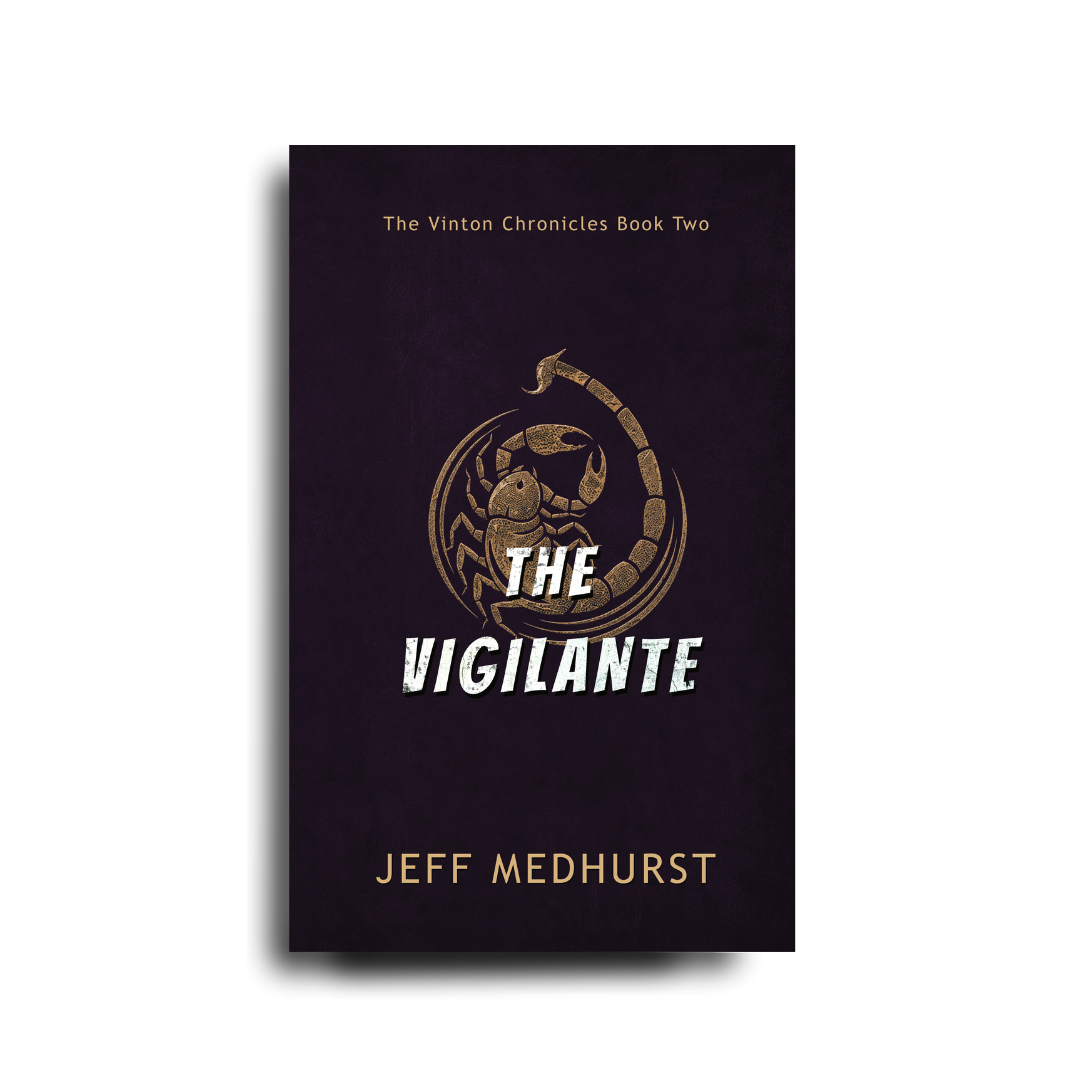
Well currently my rough drafts of books two and three of The Vinton Chronicles are complete, and I think each book ups the ante from the previous one! There are so many moments and battles I can’t wait for the readers to get to experience, but personally what I’m most excited for is to begin working properly on book four. I’ve always loved pushing ahead creatively, and I have lots of big plans for Jet Thompson and his group of friends!
Books By Jeff Medhurst