Sensitivity Reading Service
Professional Sensitivity Reading for Authentic, Inclusive Fiction for Authors
Our sensitivity reading service is designed for fiction authors seeking authenticity, nuance, and respect in their storytelling. Whether you're writing characters with diverse identities or exploring cultures, experiences, or trauma outside your own, our expert sensitivity readers ensure that your manuscript avoids harmful stereotypes, unconscious bias, or misrepresentation. From indie authors to traditionally published writers, we help you create work that resonates with truth, compassion, and depth—while still delivering a compelling narrative. If you're looking for a sensitivity reader for your novel, you’re in the right place.
Inside Our Sensitivity Reading Service Approach
-
Our sensitivity reading begins with a focus on authentic, culturally sensitive storytelling that respects lived experiences and avoids harmful stereotypes. We assess your manuscript with a critical eye for inclusion, bias, and accurate representation.
-
Every story is unique—our feedback is personalized based on your manuscript’s characters, themes, and social contexts. We offer identity-conscious guidance rooted in lived experience, helping you write with nuance and intentionality.
-
After your editorial letter is delivered, you’ll get a 30-minute follow-up consultation. We’ll walk through your feedback together, answer your questions, and clarify any revision suggestions—ensuring you’re ready to take your next draft to the next level.
-
No guesswork, no surprises. Our developmental editing service is priced at $475 (up to 100,000 words included - additional words priced at $0.0125 / per word) with clear deliverables and timelines. The general delivery time is 20 business days. Whether you're an indie author or preparing for traditional submission, you know exactly what you’re investing in.
What Our Sensitivity Reading Service Delivers
-
We ensure your story reflects marginalized identities accurately and respectfully from the start, helping you avoid misrepresentation and earn the trust of diverse readers.
-
Our readers evaluate how your plot, character arcs, and themes intersect with social issues—guiding you to strengthen your story's foundation while promoting awareness and inclusivity.
-
Your narrative voice and intent are respected. We refine for clarity and compassion without erasing your style—enhancing emotional truth and cultural sensitivity in every chapter.
-
Whether pitching agents or publishing independently, a sensitivity-reviewed manuscript positions your story as thoughtful and professionally polished—capturing attention for all the right reasons.
Our Sensitivity Reading: What You’ll Receive
Ensure your manuscript resonates with respect and authenticity through our sensitivity reading, focusing on cultural representation, character development, emotional depth, and respectful portrayal—making sure your story connects with readers in an inclusive and impactful way.
🔍 In-Depth Manuscript Review
Our sensitivity readers will thoroughly review your entire manuscript, carefully analyzing how diverse identities and communities are portrayed. We will assess character development, cultural representation, and the authenticity of experiences depicted, ensuring that your narrative is inclusive, respectful, and free of harmful biases. This detailed read-through will help identify any areas where deeper sensitivity or adjustments may be needed, ensuring that your story resonates positively with a wide and diverse audience.
🖋️ Detailed Comments & Suggestions
For a detailed critique, we provide a Microsoft Word file enriched with Track Changes. This file showcases your manuscript with in-line comments alongside the text, making it easy for you to see our suggestions and feedback. Your story is at the forefront, with our commentary seamlessly integrated.
📝 Comprehensive Editorial Letter & Author Questions
You’ll receive a comprehensive editorial letter (typically 5-10 pages) summarizing our key insights on your manuscript’s sensitivity and representation, highlighting strengths and areas for improvement.
This letter includes:
Language and Terms: Evaluation of language for any offensive terms or slurs.
Stereotypes: Identification of harmful stereotypes and suggestions for alternatives.
Character Descriptions: Analysis of character portrayals for depth and authenticity, free from harmful bias.
Settings, Traditions, Beliefs: Review of how various cultures, settings, and beliefs are depicted, ensuring accuracy and respect.
Dialogue: Assessment of character dialogue to ensure respectful, authentic interactions.
Plot/Story Arcs: Evaluation of plot and story arcs to avoid harmful narratives and ensure respectful storytelling.
Author Questions (Up to 5): The author can submit up to 5 specific questions or concerns you’d like addressed, ensuring our feedback is tailored to your needs and priorities. We will answer those questions within the editorial letter.
📞 Collaborative Follow-Up
We include a 30-minute virtual call to discuss your Editorial Letter and overall feedback. This one-on-one session is your opportunity to:
Ask questions about the feedback.
Clarify specific points or suggestions.
Develop a clear action plan for the next stage of your manuscript.
💰 Cost: $475.00 (up to 100,000 words)
📆 Delivery Time: 20 business days
We specialize in the following genres for Sensitivity Reading
Action & Adventure | Contemporary | Contemporary Romance | Cozy Mystery | Cozy Romance | Crime | Dark Fantasy | Dark Romance
Dystopian | Fantasy | Historical Fiction | Horror | Literary Fiction | Mystery | New Adult | Paranormal | Psychological | Romance
Science Fiction | Serial Killer | Slasher | Supernatural | Suspense | Thriller | Women’s Fiction | Young Adult
How to Book Our Sensitivity Reading
From inquiry to delivery: With our simple 6-step booking process.
-
Submit your Sensitivity Reading Booking Request to get started. An editor will contact you within one business day with proposed service dates based on booking request form. This booking request allows us to gather key information about your manuscript, including:
Genre
Word count
Book synopsis
Your preferred completion date
-
Once you accept the proposed service dates, we’ll send you a detailed service agreement outlining:
Terms and conditions
Agreed-upon timeline
Deliverables & scope of work
Payment schedule
Once the service agreement is accepted, we’ll send you a deposit invoice to confirm your booking. A $150 deposit is required, this deposit secures your spot on our editorial calendar and ensures we can begin work on your manuscript as planned.
-
To officially start the Sensitivity Reading, we will require your manuscript to be submitted to us the day prior to when your service is to officially begin. The required manuscript file can be submitted via email and is due by 11:59pm MST, prior to the project start date.
Follow the submission guidelines below:
Full Manuscript (up to 100,000 words)
1.5 or 2.0 Line Spacing
12 point font - Times New Roman
File Type: .docx
File Name: “yourname_title”
-
With your Sensitivity Reading in hand, our experienced editors will:
Thoroughly review your work.
Provide suggestions, revisions, and detailed feedback on issues noted within the manuscript and sensitivity read.
Deliver a tracked document with comments, and actionable suggestions.
-
As we near the end of the Sensitivity Reading, we will send the final invoice balance. The remaining balance must be paid in full before the project’s delivery date to ensure we can provide all agreed-upon deliverables.
-
Upon completion of your Sensitivity Reading, we will:
Deliver the Sensitivity Reading with our comments.
Provide all additional project deliverables, ready for the next phase of your writing journey.
Booking link for your follow-up call.
Provide a link to fill out a feedback (testimonial) form if you wish.
Write Boldly, Represent Thoughtfully – Get Started Now!
Still Unsure? Let's Talk Editing!
Book a Discovery Call now to make sure a Developmental Edit is the "write" choice for you.
Not ready to commit? Submit a Sample Edit and experience our editing expertise firsthand before making your decision!
Learn More About Sensitivity Reading

Our Sensitivity Reading Expertise
At Wicked Ink, our sensitivity readers are skilled in providing comprehensive feedback on a wide range of sensitive topics.
Below is a breakdown of the areas we specialize in, helping you create authentic, respectful, and compassionate narratives.
Mental Health & Emotional Well-Being
Anxiety: Craft characters dealing with anxiety disorders realistically, highlighting the emotional challenges they face.
Depression: Explore the complexities of depression, ensuring the mental and emotional struggles are depicted authentically.
OCD: Delve into the world of obsessive-compulsive disorder, portraying its impact on daily life and relationships.
Perfectionism: Understand the toll of perfectionism and its effects on self-worth and emotional health.
Social Anxiety: Accurately represent the challenges faced by those with social anxiety and the emotional hurdles they experience.
PTSD: Address the effects of post-traumatic stress disorder, focusing on the emotional journey and healing process.
Self-harm: Tackle the sensitive subject of self-harm with care and understanding, exploring its complexities and underlying causes.
Suicide / Suicidal Ideation: Approach the topic of suicide with respect, raising awareness and fostering empathy for those affected.
Addictions & Recovery
Addictions (General): Gain insights into the complexities of addiction, its impact, and the nuances of recovery and treatment.
Alcoholism & Drug Use: Explore substance abuse, including its struggles and the path to sobriety.
Gambling Addiction: Understand the triggers and emotional consequences of gambling addiction.
Sex Addiction: Examine the world of sex addiction and its struggles, including the journey toward recovery.
Trauma & Abuse
Child Abuse: Handle the delicate topic of child abuse with sensitivity, ensuring an accurate portrayal of its long-term effects.
Sexual Abuse: Tackle sexual abuse with care, focusing on the experiences and aftermath for survivors.
Sexual Trauma: Approach sexual trauma with empathy, shedding light on the emotional and physical consequences.
Verbal Abuse: Represent verbal abuse authentically, emphasizing its emotional toll and the healing process.
Homophobia: Navigate the damaging effects of homophobia, raising awareness and fostering empathy.
LGBTQ+ Representation & Queer Topics
2SLGBTQ+: Offer insights into the LGBTQ+ community’s experiences and challenges, ensuring authentic character portrayal.
Bisexuality: Represent the unique experiences of bisexual individuals, creating well-rounded and realistic characters.
Homosexuality: Explore diverse LGBTQ+ experiences, reflecting the complexity and richness of different identities.
Queer Topics: Embrace the many facets of queer identity, ensuring your narratives reflect the challenges and triumphs of the queer community.
Sensitive Depictions of Grief & End-of-Life
Hospice / End-of-Life Care: Approach the journey of end-of-life care with sensitivity, focusing on the emotional and practical aspects.
Loss of a Parent: Accurately depict the profound grief and life changes that follow the loss of a parent.
Health, Identity & Personal Struggles
Eating Disorders: Provide a compassionate and realistic portrayal of eating disorders, addressing both physical and emotional aspects.
Sexual Identity & Gender: Address complex aspects of sexuality and gender identity with care and authenticity.
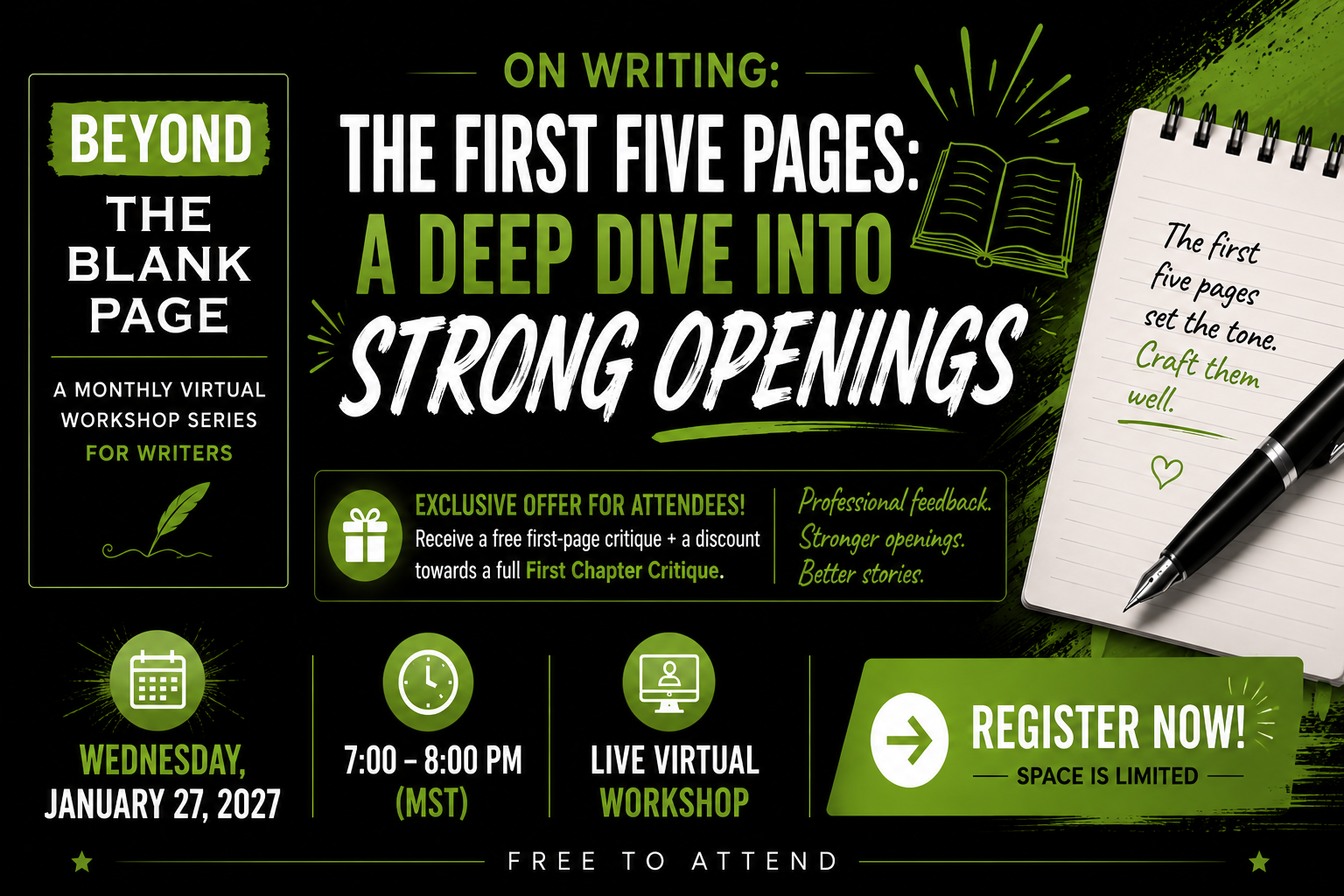




Upcoming Writing Workshops
When Should You Consider Sensitivity Reading?
Diverse Characters:
If your story features characters from backgrounds or identities different from your own, sensitivity reading is crucial to ensure their portrayal is authentic, nuanced, and free from harmful assumptions. A sensitivity reader can help you navigate complex character dynamics and experiences with respect and accuracy.
Cultural Settings:
When your narrative is set in a specific cultural, historical, or geographical context, sensitivity reading helps you portray it with authenticity. This ensures that the customs, traditions, language, and experiences are accurately represented, avoiding oversimplification or misinterpretation.
Representation Matters:
If your story includes underrepresented or marginalized communities, sensitivity reading is essential for ensuring they are depicted thoughtfully and accurately. It helps prevent harmful stereotypes and ensures that diverse voices are given the depth and respect they deserve.
Avoiding Stereotypes:
To prevent the perpetuation of harmful stereotypes, biases, or one-dimensional portrayals, sensitivity reading helps identify subtle missteps that might negatively impact your readers. This ensures your story doesn’t inadvertently harm or misrepresent vulnerable groups.
Character Authenticity:
When you want to ensure your characters' experiences, identities, and struggles are portrayed with emotional depth, realism, and respect, sensitivity reading is invaluable. It can help you refine your characters’ voices and ensure they resonate with authenticity.
Inclusivity Goals:
If your aim is to create a story that celebrates diversity, fosters inclusivity, and connects with a wide range of readers, sensitivity reading ensures your narrative is sensitive to multiple perspectives. It supports your goal of telling a story that is not only engaging but also mindful and inclusive.
Before Publication:
Sensitivity reading is most effective when conducted before publication, giving you time to address any issues, make necessary revisions, and ensure that your final draft is respectful, accurate, and thoughtful. It’s a step in the editing process that helps you put forward the best version of your work.
Key Areas of Focus in Sensitivity Reading
Your manuscript is evaluated for respectful representation, cultural authenticity, and avoidance of harmful stereotypes.
Authentic Representation:
Sensitivity reading ensures that characters from diverse backgrounds—whether defined by race, ethnicity, gender identity, sexuality, religion, or ability—are portrayed with depth, complexity, and authenticity. The goal is to avoid flattening characters into stereotypes or relying on superficial traits, ensuring that each character’s experiences feel true to their identity.
Emotional and Mental Health:
Sensitivity readers ensure that mental health, trauma, and emotional experiences are depicted with care, avoiding harmful stereotypes and unrealistic portrayals. They also help ensure that coping mechanisms, diagnoses, and emotional states are represented accurately, fostering a greater understanding of these experiences for readers.
Cultural Sensitivity:
A sensitivity reader checks whether cultural settings, customs, and traditions are accurately and respectfully portrayed. This includes avoiding appropriation and ensuring that cultural elements are not misrepresented, overly generalized, or depicted in a way that might perpetuate harmful myths or misunderstandings.
Marginalized Groups:
Sensitivity reading provides insights into how marginalized groups are represented in a story, ensuring that their struggles, triumphs, and experiences are shown with respect. This includes evaluating whether these characters are given agency, voice, and complexity, and not reduced to secondary roles or one-dimensional plot devices.
Language and Dialogue:
The language used in a story—especially in dialogue—is scrutinized for its impact on representation. This means ensuring that characters’ speech, terms, and descriptions are in line with their identities, experiences, and communities. Sensitivity readers flag harmful language, slurs, or outdated terminology and suggest respectful alternatives that reflect inclusivity.
Harmful Stereotypes:
Sensitivity readers identify and help eliminate potentially damaging stereotypes that could perpetuate biases or reinforce harmful views. Whether it’s about race, gender, class, or any other characteristic, they help ensure that all portrayals are thoughtful and nuanced, and that negative, simplistic depictions are avoided.
Frequently Asked Questions
-
Our Sensitivity Reading is priced at $475, (up to 100,000 words included - additional words priced at $0.0125 / per word) with delivery within 20 business days.
-
Below is an example of a Sensitivity Reading Booking Request price breakdown:
Booking Date: March 1
Project Start: April 1
Project Due: May 15
The total cost is $475. Here’s an example breakdown:
Deposit: A $150 deposit is due upon booking, on March 1 to secure your spot.
Project Starts on April 1.
Final balance ($325): Due before receiving the completed deliverables, on May 15.
This will be outlined according to the preferred booking dates within your service agreement.
-
In-Depth Manuscript Review
We thoroughly review your entire manuscript, analyzing how diverse identities and communities are represented. Our focus is on character development, cultural accuracy, and ensuring your narrative is inclusive and free of harmful biases.Detailed Comments & Suggestions
You’ll receive a Word document with Track Changes, providing in-line comments and suggestions to help refine your manuscript for greater sensitivity.Comprehensive Editorial Letter & Author Questions
A 5-10 page editorial letter summarizing key insights, highlighting strengths, and offering suggestions for improvement. You can also submit up to 5 specific questions for tailored feedback.Collaborative Follow-Up
A 30-minute virtual call to discuss your feedback, clarify suggestions, and create an action plan for revisions.
-
It’s best to consider a sensitivity reading early on after your first draft before a developmental edit, in case you have any large issues to address due to sensitivity. This allows you to address any potential issues with cultural, social, or personal topics while still leaving room for revisions based on feedback. Sensitivity reading can help ensure that your portrayal of sensitive topics—such as race, gender, mental health, and identity—is respectful, accurate, and authentic. The earlier you incorporate this feedback, the more time you’ll have to refine and strengthen your story.
-
To ensure availability, it’s recommended to book your Sensitivity Reading on average 2–3 weeks in advance. However, timelines may vary based on our editorial schedule. If you have a specific deadline, contact us early and we can help secure a spot.
-
Yes! We love working on all fiction genres. If you’re unsure on what we might bring to your work (genre), feel free to contact us to discuss your project or submit for a Sample Edit.
-
After you receive your Sensitivity Reading and deliverables, we suggest reviewing the feedback and then scheduling your included 30-minute virtual call where you can:
Ask questions about the feedback.
Clarify specific points or suggestions.
Discuss the next steps for your manuscript.
-
Yes, of course! We encourage open communication and are happy to answer any questions. This is why we include the 30-minute virtual call. This is your opportunity with us to answer any questions you may have and go over the feedback!
-
Yes, confidentiality is a top priority. Your manuscript will remain secure and private throughout the editing process. If you decide to move forward with us and book a Sensitivity Reading, part of our service agreement includes a non-disclosure clause. So your work is fully protected.
-
Yes! We offer a Sample Edit, so you can experience how our feedback works and decide if it aligns with your vision before committing to a Sensitivity Reading.
You can also download our Sensitivity Reading Booklet (Link download) which has more information and a sample of a Sensitivity Reading.
-
Yes! Absolutely! We provide a free, no-obligation discovery call where we can answer any questions you may have regarding our services. We’ll go over your goals, answer your questions, provide clarity, and recommend the best editing service for your story.
You can Book your Discovery Call now.
-
Absolutely! After we send you the deliverables and complete the follow-up call, we'll provide you with a link to a feedback form. We truly value your feedback, as it helps future writers who may want to work with us. As a token of our thanks, we offer a discount code for your next editing service after completing the feedback form. While it's entirely up to you, we encourage you to share your thoughts to help us improve and continue offering the best service possible.
-
You can always reach out to us through our Contact Form and we would be happy to answer your questions.