L. C. Walters (An Author Spotlight Interview - August 2026)
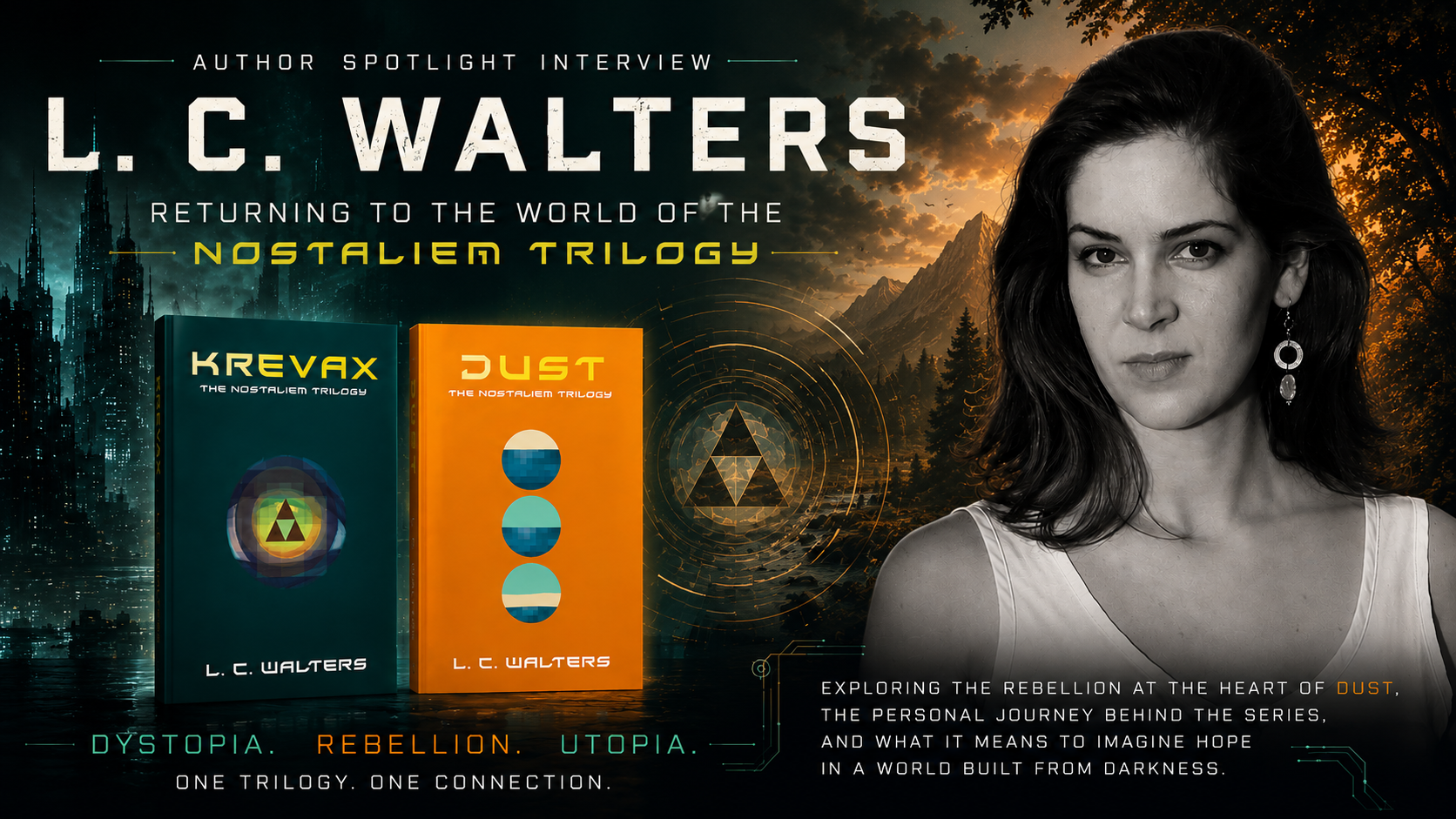
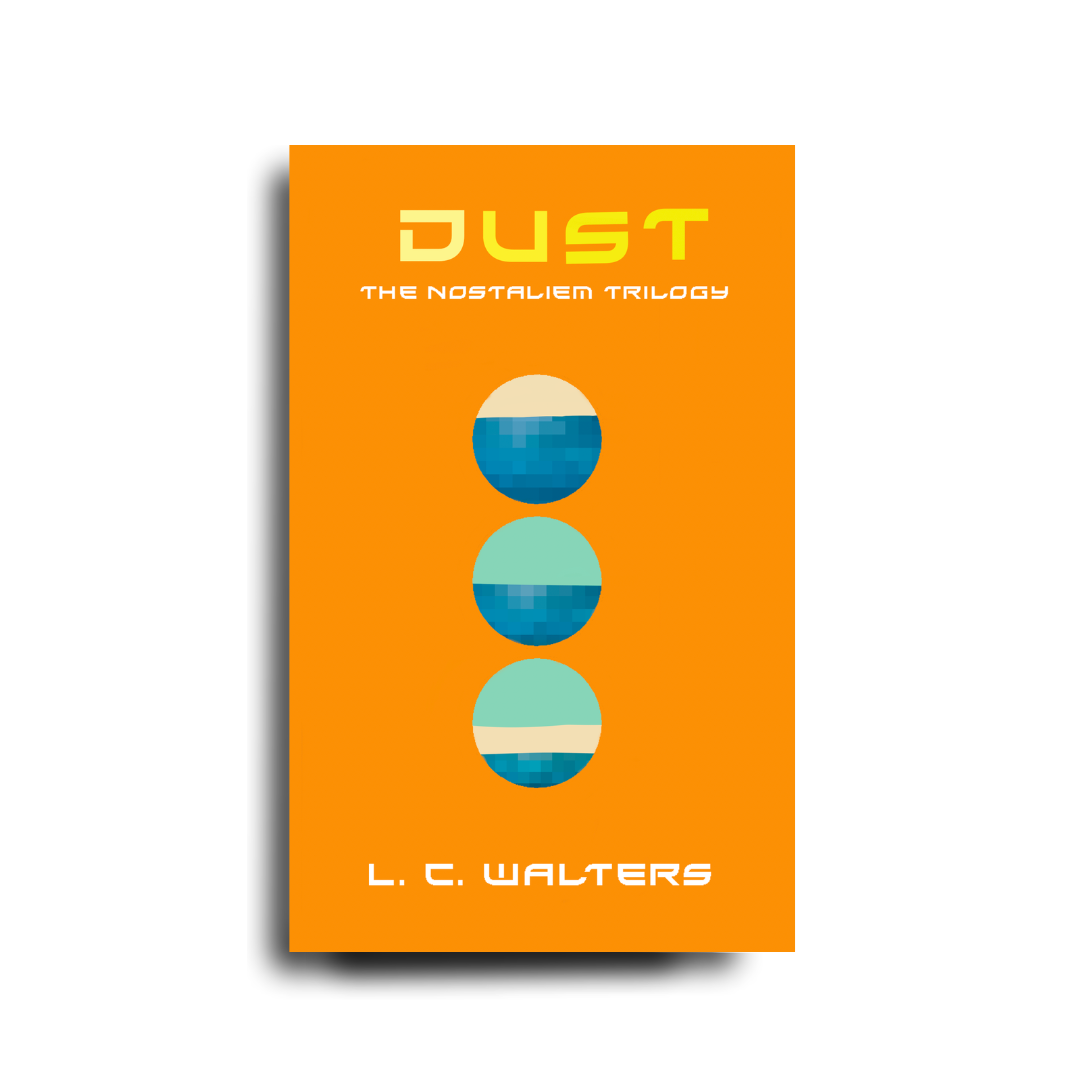
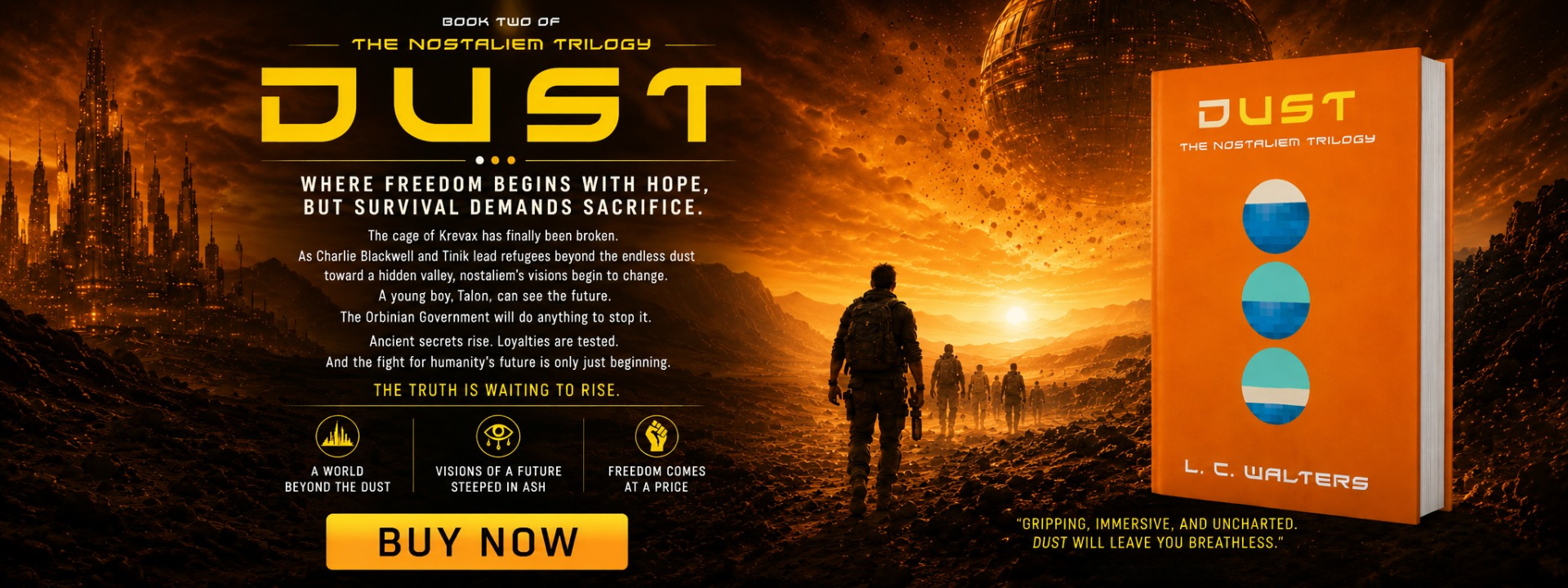
With the release of Dust, the second novel in the Nostaliem Trilogy, author L. C. Walters returns to a world that has been evolving alongside her for nearly two decades. What began beneath the oppressive streets of Krevax now pushes beyond the boundaries readers thought they understood, opening the series to new landscapes, communities, dangers, and possibilities. But while the world of Nostaliem is growing larger, the questions at its heart remain deeply personal: How do we survive the systems that shape us? What happens after we recognize our oppression? And, perhaps most importantly, how do we begin building something better?
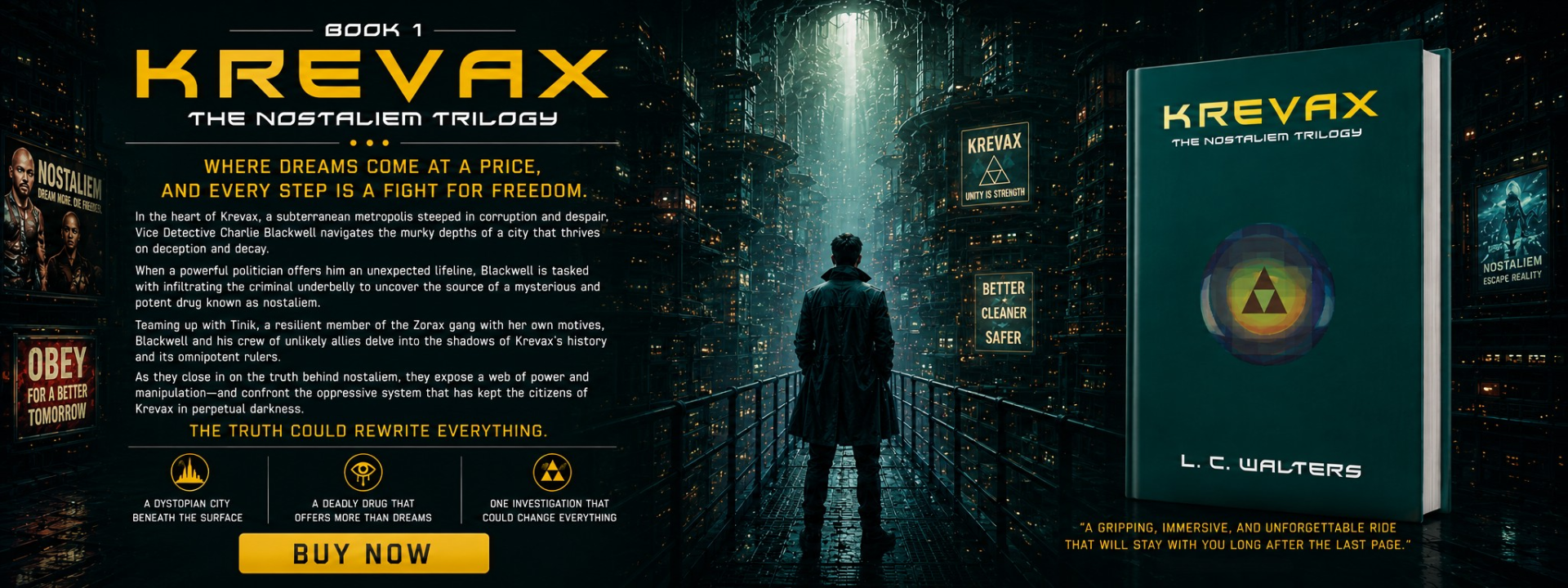
Where Krevax plunged readers into the claustrophobic darkness of a society defined by control, memory, and survival, Dust turns its attention toward rebellion. Charlie Blackwell, Tinik, and the characters readers first encountered as individuals fighting simply to survive must now confront what it means to trust one another, form community, and imagine a future beyond the world they were taught to accept. The surface itself brings an entirely new dimension to the trilogy, revealing unfamiliar creatures, cultures, and the mysterious Oqa, while challenging everything the people of Krevax believed existed beyond their underground home.
For Walters, that evolution mirrors a much more personal journey. She began writing Krevax at eighteen, using its dystopian world in part to process her own experiences with trauma, memory, and rumination. As she grew, so did the story. Dust shifts the question from what creates a dystopia to what it takes to resist one, exploring community as an act of rebellion and the complicated work of imagining a better world. Even nostaliem itself—the memory-sharing substance at the centre of the trilogy—takes on deeper meaning as a reflection of connection, empathy, and our desire to truly understand the experiences of others.
In this new Author Spotlight, Walters takes us back inside the Nostaliem Trilogy following the release of Dust to discuss how the series has grown since Krevax, the changing relationships between its characters, the challenge of hurting characters she has carried with her for almost twenty years, and the deeply personal experiences woven beneath its science-fiction world. She also looks ahead to Glass, the trilogy's final chapter, which will complete a progression she describes with striking simplicity: dystopia, rebellion, utopia.
Join us as we return to the world of the Nostaliem Trilogy with L. C. Walters, exploring the rebellion at the heart of Dust, the personal journey behind the series, and what it means to imagine hope in a world built from darkness.
1. Dust is the second entry in the Nostaliem trilogy. How did it feel stepping back into this world after Krevax, and did anything about the direction of the story surprise you as you began writing the sequel?
In a way I felt I never left. It will be strange completing the third book, Glass, because then I will actually have to say goodbye to the world and the characters.
2. Krevax introduced readers to a dark, controlled world beneath the surface, while Dust expands the series into something much larger. Was that evolution always part of your vision for the trilogy, or did the world grow naturally as you wrote?
I started writing Krevax when I was 18. As I’ve gotten older my world has expanded, and so Dust grew with me. It wasn’t necessarily a plan, more of a natural progression of my thoughts. Krevax was darker because I was stuck and writing it helped me process my trauma. Dust starts to question how one might build a better world, rather than trying to understand what makes a place dystopian.
3. The Nostaliem series blends dystopian science fiction with mystery, political intrigue, and questions about memory, freedom, and control. What new themes did you want to explore in Dust that you hadn't been able to fully examine in Krevax?
Dust imagines a people who are finally waking up to the oppression they have been trapped in. It explores the political reality of building community as an act of rebellion, and the risks that push societies forward.
4. The world of the Nostaliem trilogy is incredibly distinct, from the underground city of Krevax to the world that begins opening up beyond it. Was there a particular setting or element of the world in Dust that you found especially challenging, or rewarding, to bring to life?
I found the descriptions of animals in Dust to be particularly exciting. Krevaxers had been led to believe nothing survived on the surface, so writing their reactions to unknown creatures, and creating the unique depictions of the creatures was fun.
5. How has your approach to writing Charlie Blackwell, Tinik, and the other characters changed or deepened now that you've spent two books with them?
In a way it has gotten easier as I am more familiar with my characters. My approach has changed as they have matured and their relationships with each other have grown. In Krevax my main characters were forced to survive as individuals first, now they are learning to lean on others and trust their community.
6. Atmosphere plays such an important role throughout the series. How do you approach creating settings that feel immersive while still allowing the world to evolve and reveal new sides of itself with each book?
When I write a setting, I like to start with a feeling. In Krevax that feeling was usually anxiety or discomfort, for Dust, the surface can be cruel and oppressive, or friendly and expansive, depending on the character’s familiarity with the surface. Each character provides a lens which can focus in on a unique perspective.
7. Nostaliem itself has been at the heart of the series from the beginning. What inspired the concept, and how important is it to the larger story you're telling across the trilogy?
I struggled with severe rumination for many years. Nostaliem came from my obsession with particular memories, and from my desire to have others understand my experience. The idea that you could share a memory, or understand another’s experience with such lucidity has always been an intense desire for me. Within the trilogy, nostaliem acts as a way of connecting characters to each other and to the earth. It is meant to remind us that we are all connected.
8. What was your favourite part about returning to this world for Dust? And, on the other side of that, what was the most challenging or frustrating part of writing a sequel?
I’ve enjoyed exploring the Oqa, who are a group of people who survived on the surface unbeknownst to Krevax or the Orbs. Writing about their culture and perspectives has been a therapeutic way to work through my own spiritual beliefs.
On the challenging side, there’s darker parts of the trilogy that I had to explore for the story to be impactful. It is hard to hurt characters that you have been carrying around with you for almost two decades. They may not be real, but some part of them still feels real.
9. Krevax and Dust explore freedom from very different perspectives. How would you describe the emotional core of the Nostaliem series, and has your understanding of that changed as the trilogy has developed?
The emotional core is simple: Dystopia, Rebellion, Utopia
10. If you could spend a day anywhere in the world of the Nostaliem trilogy with one of your characters, who would you choose, where would you go, and why?
I would go to the end of the third novel and spend the day with Tinik. We would sit in the trees in the orchard. I won’t say why. If you read the entire trilogy, you’ll understand why.
11. With Dust marking the second chapter of a planned trilogy, has knowing where the overall series is headed changed the way you approach writing each individual book?
Actually no, in a way they have all felt like standalone novels, Krevax explores a dystopia, Dust explores a rebellion, and Glass explores a utopia. There is clear character progression throughout the trilogy, but each book is exploring its own concept.
12. Lastly, for readers who are discovering the Nostaliem trilogy for the first time with the release of Dust, what would you want them to know before they step into the world of Krevax?
Honesty, just a trigger warning. At its core, the books are an exploration of my own trauma and healing, along with my thoughts on society and politics, wrapped in an adventure novel. Overall, this trilogy is incredibly dark, so if that is not something you are comfortable reading right now, please feel free to skip it.
Books By L. C. Walters