L. C. Walters (An Author Spotlight Interview - July 2025)
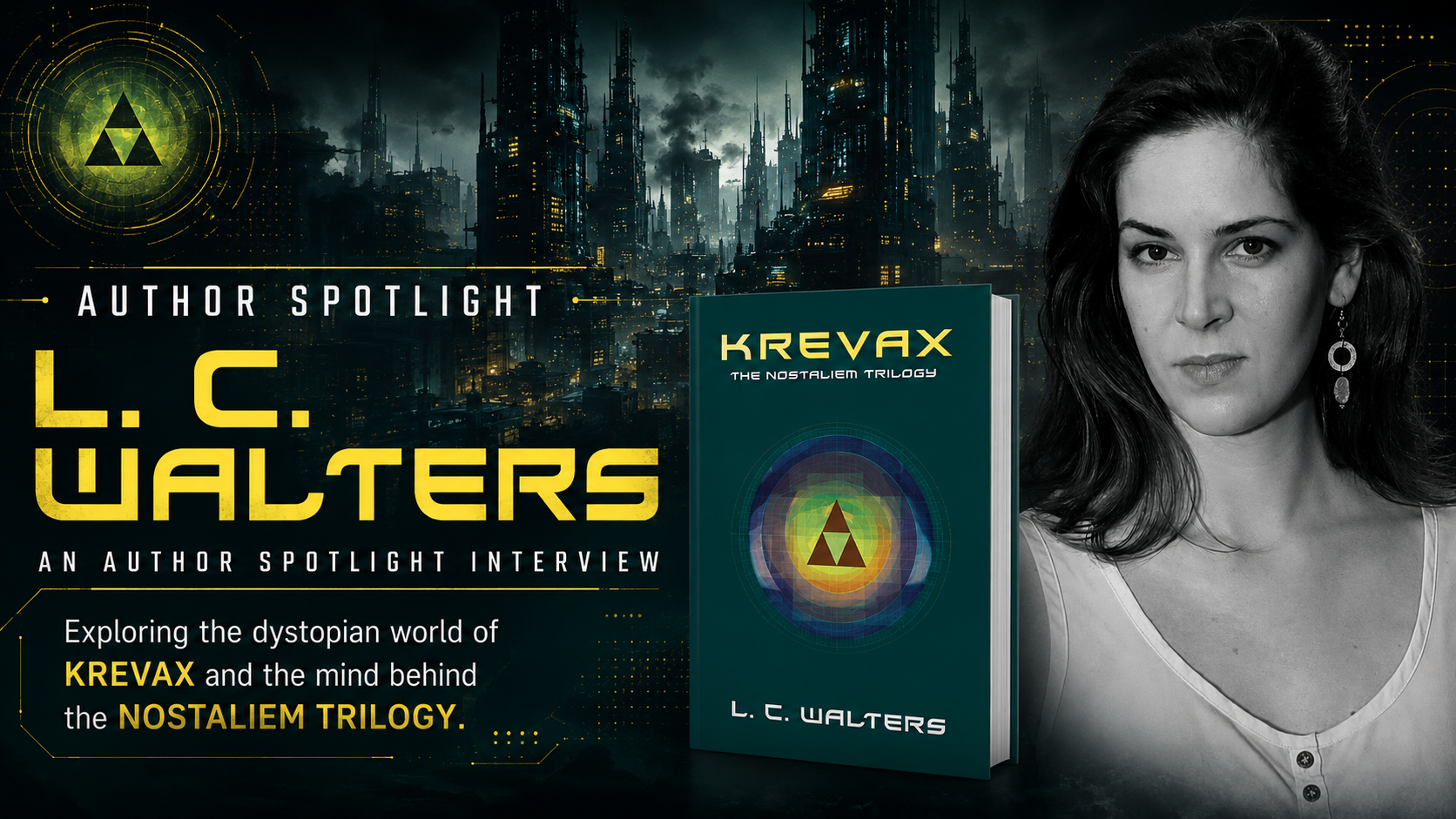
As the countdown begins for one of the most anticipated science fiction debuts of the summer, author L. C. Walters invites readers into the shadows of Krevax—a dystopian metropolis built on control, decay, and the desperate price of escape. Releasing July 15, Krevax marks the gripping first installment in the Nostaliem Trilogy, a bold new series that fuses atmospheric world-building, futuristic noir, and a haunting exploration of what it means to resist when everything is built to keep you compliant.
In a world where dreams come at a cost and freedom is a fading memory, Vice Detective Charlie Blackwell is drawn into a deadly investigation that exposes the rot at the core of humanity’s last city. Tasked with uncovering the truth behind nostaliem—a dream-inducing drug tied to a string of violent deaths—Blackwell teams up with a street-savvy rebel named Tinik to pull apart the machinery of a broken world.
In this exclusive pre-release author spotlight, L. C. Walters shares the inspiration behind Krevax, the evolution of its dystopian landscape, and how the trilogy explores memory, manipulation, and rebellion in a society that wants you to forget who you are. With its thought-provoking themes and cinematic tension, Krevax is poised to make a powerful impact—and this is your chance to step inside before the doors to the underground city open on July 15.
Join us as we uncover the inspirations, challenges, and creative vision behind Krevax, offering an early glimpse into the mind shaping the Nostaliem Trilogy and its dark, dystopian future.
1. Can you tell us a bit about yourself and your journey as a writer?
I’ve always felt like an outsider, and stories were an escape, especially the stories in my mind. I would describe myself as a maladaptive daydreamer. Living in my head has made me a natural storyteller, but not a natural writer. As someone with a mental illness and a learning disability, school never came easily. I loved writing, but it took me decades to understand how to write correctly. In the same way I couldn’t understand how to read a clock, tell left from right, or memorize a multiplication table, I also couldn’t understand how to use a comma, period, or quotations in a sentence. Learning to write has been extremely challenging, but my passion for storytelling fuelled me. I am incredibly thankful for the opportunity to become an author, and I hope my writing will only improve as I continue to work.
2. What inspired you to start writing, and how did you discover your passion for storytelling?
Writing has been like breathing, I had stories that I needed to get out of me. I don’t feel it was a passion I discovered, the need to tell stories has always been with me. I’ve always strived to understand the world around me, and when I’ve seen things that others are overlooking it has resulted in storytelling. Stories feel powerful and are a way to share perspectives. I envy trees, as I imagine a hive mind of communication. As humans we are alone, trapped in bodies that tell stories we may not align with. Stories are a way to escape the confines of the body, a way to connect with minds you may never meet in person. Perhaps I started writing to escape myself, or to learn, or to feel less lonely.
3. Could you share some insights into your creative process? Do you have any rituals or habits that help you write?
I spend most of my time daydreaming. If something feels important, I’ll write it down. Routine helps me write. I prefer when every day is the same. If I am struggling to write, music helps me focus.
4. What themes or messages do you often explore in your writing, and why are they important to you?
Anti-capitalism and anti-patriarchy are the most important messages in my work. Capitalism is the destructive force that dehumanizes and isolates us. It justifies colonialism and imperialism and reinforces hierarchical systems, including patriarchy. I believe that until all of us are seen as truly equal, we will continue to destroy ourselves and the planet.
5. Are there any particular authors or books that have influenced your writing style or storytelling approach?
When thinking about my path to science fiction, Margaret Atwood and George Orwell have both been important influences. As a child, His Dark Materials by Philip Pullman and Sabriel, by Garth Nix were worlds that I escaped into, and inspired me to create my own.
6. Do you have any advice for aspiring writers who are just starting their journey?
Write something to make a difference. If it feels important to tell a story, then it is.
7. How do you balance writing with other aspects of your life, such as work, family, and personal interests?
Before 2020, I was pursuing a career in film, which I saw as another medium to tell stories in. With covid, I was laid off from my role in VFX and found myself returning to a half-completed book I’d started writing as a teenager. This book would eventually become Krevax and send me down a new career path. Writing is now my full-time work, and I write when my son is attending preschool.
8. How do you stay motivated and overcome writer’s block when faced with challenges in your writing process?
If I am just getting started, I will watch 10 minutes of a silly show, as a reward for every 10 minutes of writing. Usually after a couple show breaks, I find I am able to continue writing with ease.
9. How do you manage your time and set goals to ensure consistent progress in your writing projects?
I am not consistent. I try to write a little bit each day, and if I am not in a place to write, at least I am making progress. If I am lucky, I find myself in a flow and then writing feels effortless.
10. How do you handle moments of doubt or uncertainty in your writing process, and what strategies do you use to persevere through challenges?
I do worry that my work will be misinterpreted, or even harmful in some way, but then I refocus on my intention and continue writing. We cannot control what our art becomes once we have created it, so we must let it go.
11. What role do emotions and empathy play in your writing, and how do you strive to evoke emotional responses from your readers?
When I write, I try to humanize my characters as much as possible. I spend hours imagining how I might feel in their circumstances and then I try to write that as thoughtfully as possible. I hope that my characters have authenticity, but I am also learning with every chapter I complete.
12. Can you share any insights into the importance of a strong opening hook or first chapter in capturing readers attention and setting the tone for the rest of the book?
In the age of short attention spans, a strong opening hook is really all you have, or at least it can feel that way. I think every writer tries hard to connect with readers, but truthfully not everyone is going to like your work. Write the hook that works for you, art that tries to gain mass appeal is doomed to become meaningless.
13. Can you discuss any experiences of writer’s block or creative burnout, and how do you rejuvenate your creativity during those times?
Burnout has been a seasonal struggle, and I find what helps most is taking a break. In the springtime I have depression. When this happens, I don’t force myself to write but instead ride my bike in the sunshine until I am capable of work again. In capitalism we are taught that constant productivity makes worth and identity, but this is unnatural, like the seasons we are meant to rest. I used to force myself to work beyond my limits and would inevitably find myself unable to get out of bed, sometimes for months at a time. We should not allow those who seek to profit off our submission to define our worth and meaning in this life. In my latest bout of burnout, it was being outside that led to inspiration to write. A goose asked me for help. It was limping and its right foot was injured. I didn’t know how to help it in the moment, which left me feeling extremely guilty. I wished I had at least offered it comfort, but I didn’t because I was afraid of bird flu. Although this was upsetting, it helped me figure out how to get in the mind of a character for the start of my next book.
14. Are there any upcoming projects or future plans that you’re excited to share with your readers?
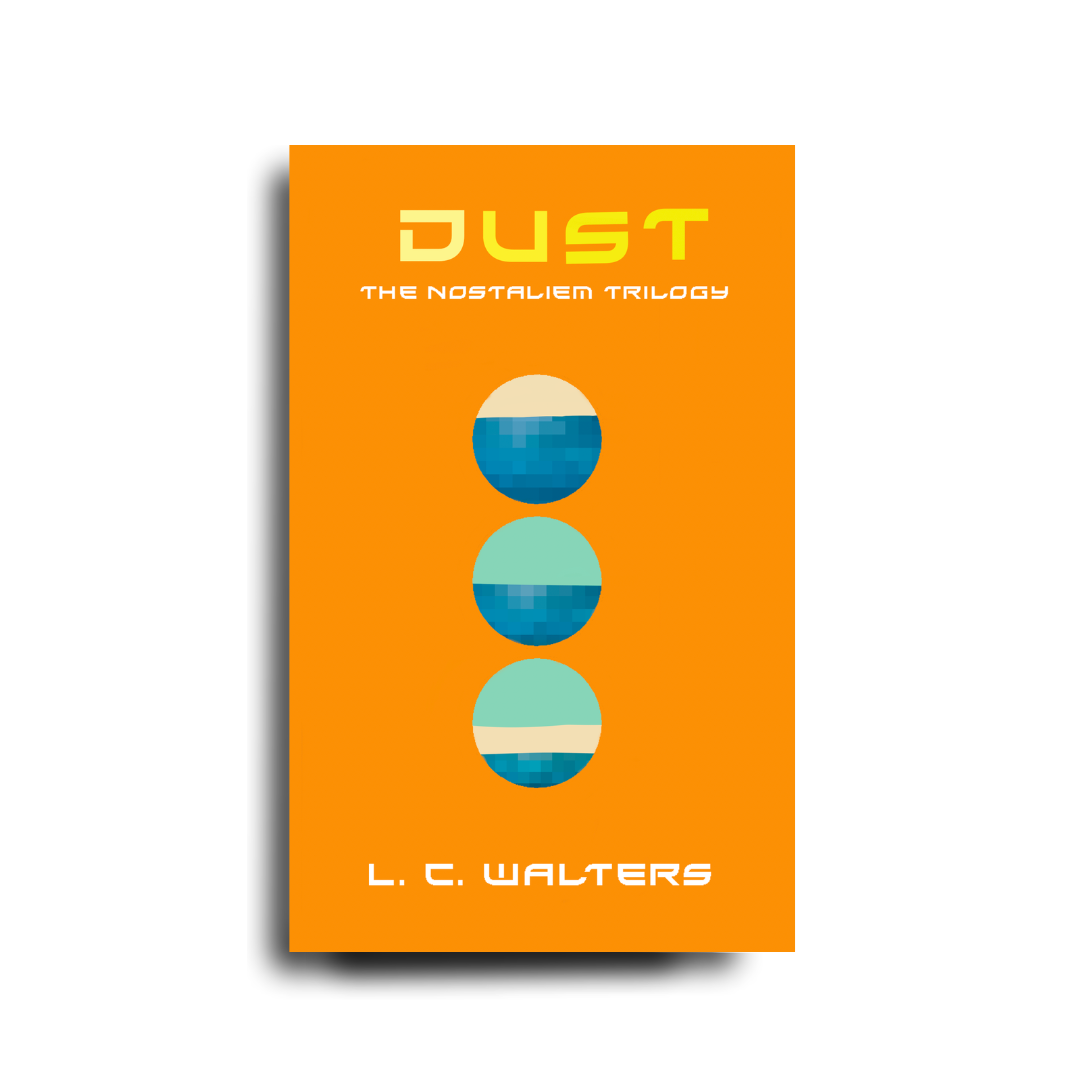
Upcoming projects include my second and third novel in The Nostaliem Trilogy. I have already completed the manuscript of Dust, and have just started writing Glass, which I am very excited about. As for future plans, I don’t have a specific project in mind, but I find myself thinking back to covid. I became suicidal after I was laid off from work, and this experience feels worth investigating in a novella. I would call the book Go Bananas, and it would be about a character’s slow unravel during lockdown.
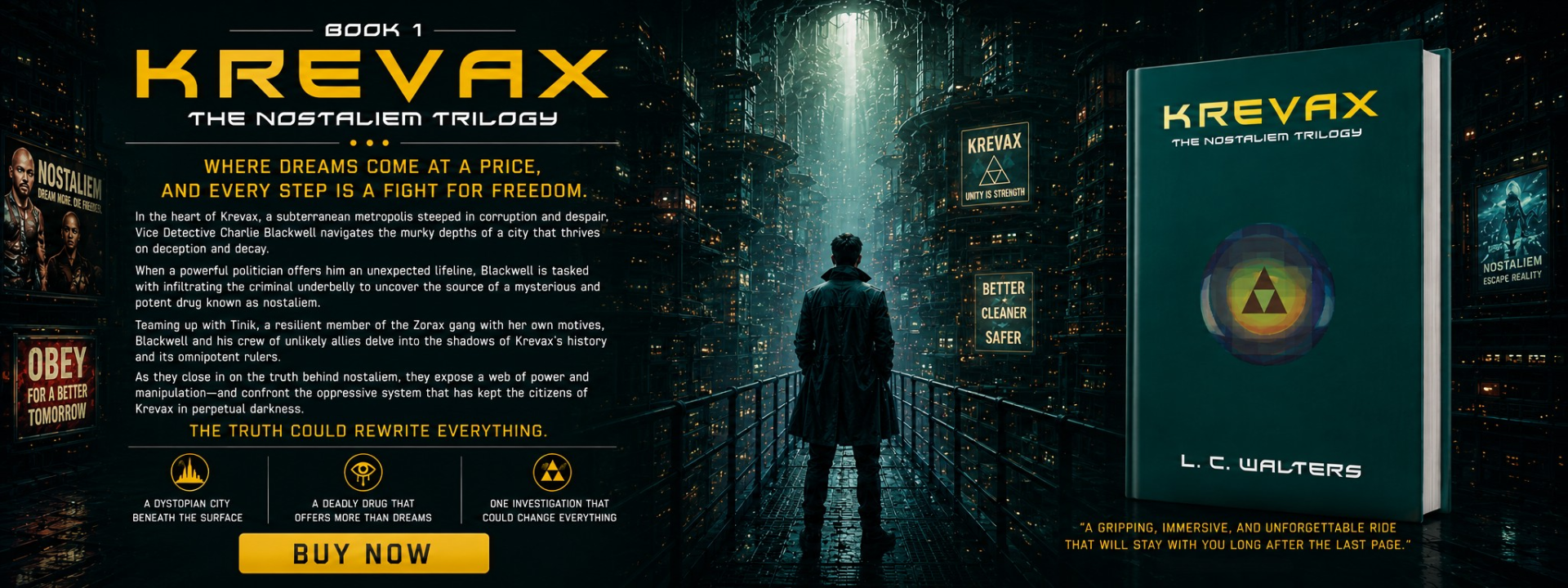
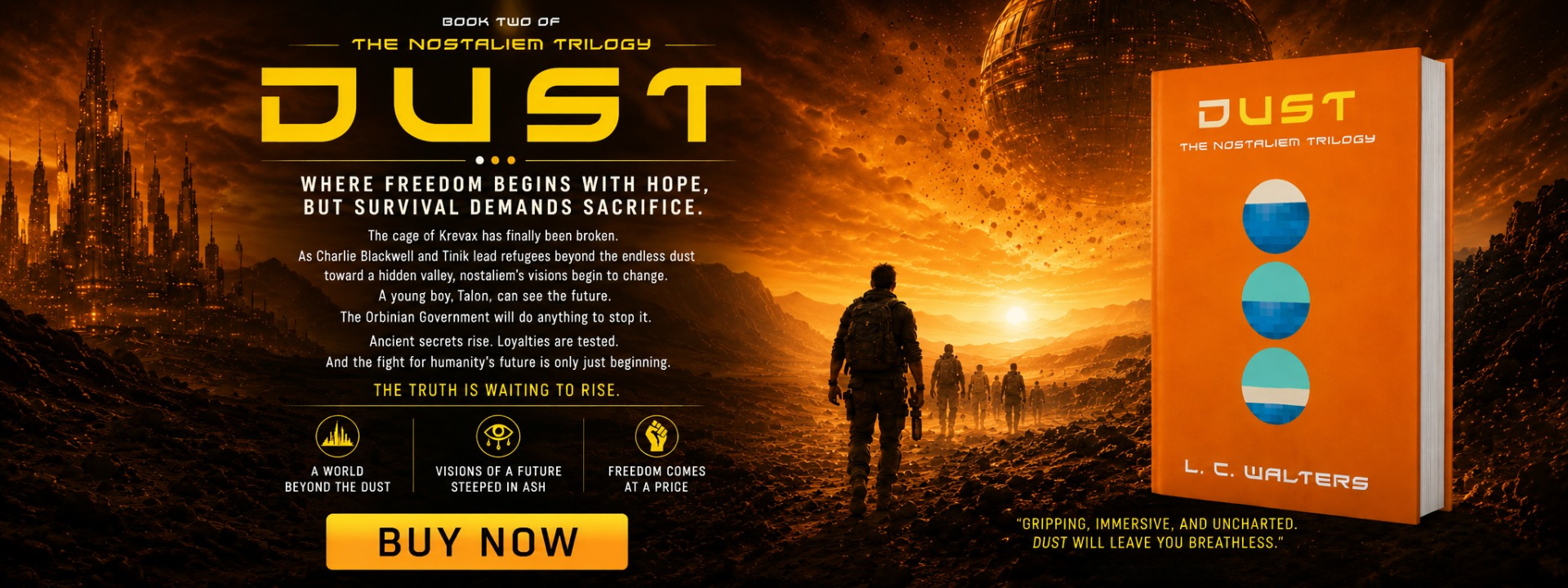
Books By L. C. Walters