Chris Harrison (An Author Spotlight Interview - June 2025)
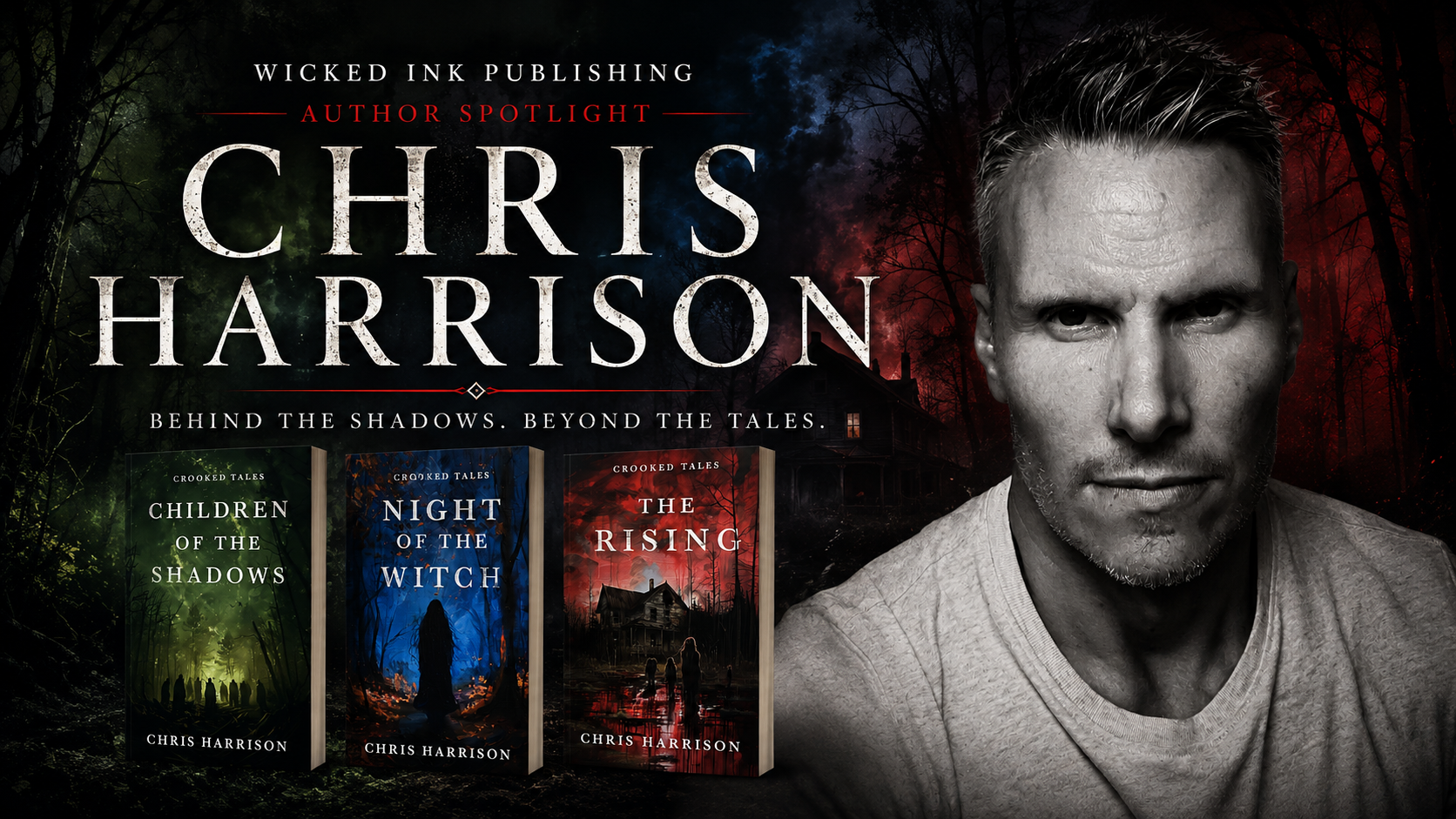
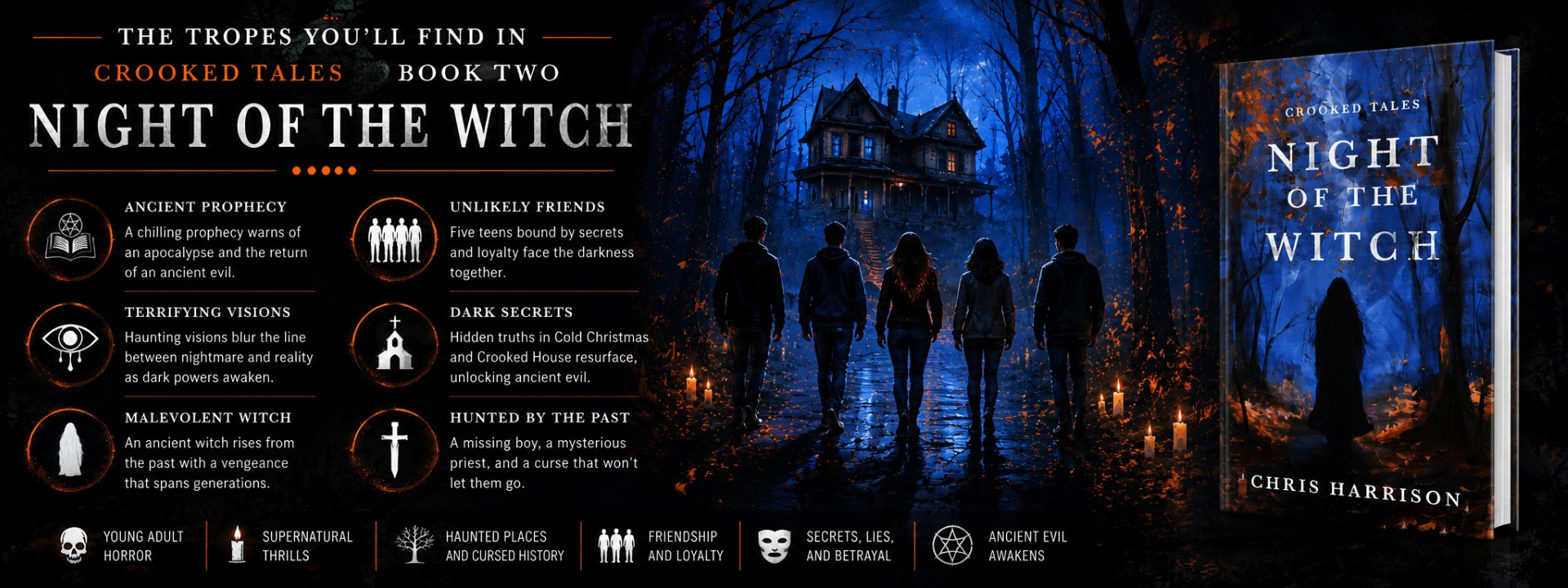
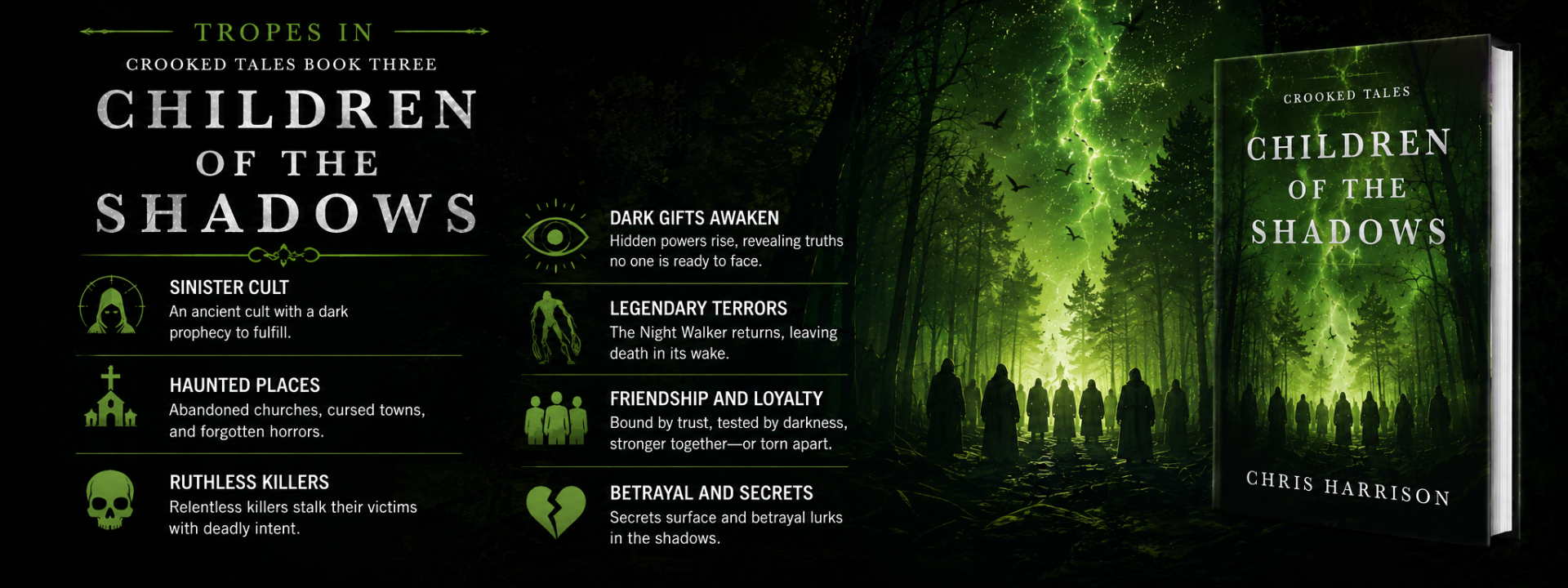
Following the chilling success of The Rising and Night of the Witch, author Chris Harrison returns with Children of the Shadows—the third and most psychologically intense installment in his acclaimed Crooked Tales series. Known for weaving haunting atmosphere, folklore, and supernatural horror into a compelling narrative, Chris elevates the tension in this latest entry by delving deep into the inner fears and fractured bonds of his characters. As the shadows grow longer and the stakes higher, Children of the Shadows explores themes of isolation, grief, and paranoia with a boldness that redefines what young adult horror can be.
In this exclusive author spotlight interview, Chris opens up about the creative process behind the book, how the story evolved in unexpected ways, and the emotional complexity that drives his characters forward. Whether you're a long-time fan of the series or stepping into Crooked House for the first time, this is your chance to go behind the scenes with the writer who continues to reshape modern horror for a new generation.
Join us as we uncover the inspirations, challenges, and creative choices behind Children of the Shadows, offering a closer look at the mind behind the Crooked Tales series.
1. Children Of The Shadows is the third entry in your Crooked Tales series. How did it feel stepping back into this world again — and did it surprise you how the story evolved?
I love stepping back into the world of Crooked Tales. Each time I do, it feels like I’m catching up with old friends, so I do my best to capture that feeling for the reader as I want them to care about the characters just as much as I do. Whenever I start writing a new book, I allow myself enough room to explore any new ideas as they come to me. My whole approach to planning is pretty fluid for that reason as I think it’s easy to get hung up on a mediocre idea or become too attached. For me, no idea is ever set in stone, just like no character is ever safe, and I believe some of my best ideas have either been spontaneous or come from left field. There are several twists in Children of the Shadows that were never in the original script, so to speak, but now I can’t imagine the series without them.
2. Without giving too much away, Children Of The Shadows feels darker and even more psychological than the first two books. Was that a conscious decision from the start, or did it develop naturally during writing?
It was always my plan to go darker with each book, but I think the pace of that shift has happened organically. I’m always looking for new ways to unsettle the reader and wrong-foot them, so in that pursuit I’ve ended up with some pretty dark material. I think the trick then is creating something layered enough for the different age groups who follow the series. Secretly I’m waiting for someone to tap me on the shoulder and say “You’ve gone too far this time Chris” but until that happens, I’ll keep trying to push things further. Proceed until apprehended.
3. This series has always balanced horror, mystery, and a bit of old-world folklore. What new themes or fears did you want to explore in this book that you hadn't yet touched in The Rising or Night of the Witch?
I wanted to keep all the components that make the series tick, but at the same time introduce a few more psychological themes. In Night of the Witch, there was a clear antagonist for them all to focus on, and by the end of the book the main characters have found their groove and become more of a team. For Children of the Shadows, I wanted to shatter that groove and isolate everyone as much as possible. There are a number of hard-hitting revelations in this book, and each one feels kind of personal, disrupting the way characters behave and interact with each other.
When I was a kid, I was a huge fan of films like The Wicker Man and Invasion of the Body Snatchers, so I wanted to capture those feelings of suspicion and paranoia. The book’s locations help amplify this too. They are more claustrophobic and there’s an underlying feeling of being trapped which runs throughout. That’s not to say Children of the Shadows doesn’t have its fare share of monsters, but this time around there are just as many internal battles going on as there are external.
4. The Crooked Tales world is full of haunting imagery. Was there a specific scene in Children Of The Shadows that you found particularly challenging — or rewarding — to write?
There’s a macabre (and pretty gruesome) ritual in this book which I found both challenging and rewarding. It involves the summoning of a weaver, which is essentially a giant acid-spitting spider. I definitely underestimated the number of moving parts I had to pull together when I first came up with the idea, not to mention creating a ritual that was suitably grim. I won’t spoil anything, but I’m really glad I persevered as it ended up being another one of those moments that altered the trajectory of the series.
5. How has your approach to crafting characters changed or deepened as the series has progressed?
I prefer to gradually peal back the layers of my characters, so over the course of each book it feels like a natural process of getting to know them better. I dedicate a lot of time to individual arcs and that helps me decide which aspects of their personality I need to reveal more of to help the reader empathise (or not). Now that I’m further into the series, I guess I think more about fallout too, and how new experiences shape characters going forward. For the main, I’m dealing with impressionable kids, so in Children of the Shadows it was important to tap into how they process things internally; specifically guilt and grief. They’ve been through a lot in a short space of time, so there are a lot of shifting dynamics as a result and that just adds to the overall tension and paranoia bubbling beneath the surface.
6. Readers have really connected with the atmosphere you build in these stories. Can you walk us through how you create such vivid settings that feel almost like characters themselves?
I visualise everything. I often sit in silence with my eyes closed and imagine myself in these godawful places, then jot down all the words I can think of that capture whatever I was feeling at the time. I try to cover all five senses wherever possible and use it as a crib sheet going forward. If it’s a town or a building I’m describing, I’ll go as far as drawing maps and blueprints - anything to help bring a place to life. I do treat places just like characters and think that comes from my obsession with the Marsten House in Salem’s Lot. The more immersive a scene is, hopefully the more a reader will enjoy it and remember the experience.
7. In Children Of The Shadows, the title alone hints at lurking dangers. How important is the idea of "what's unseen" in your horror writing?
For this book it’s more important than ever. Along with the various monsters the group face, there is a wider intangible threat they can’t quite fathom. As they become increasingly cut off from the outside world, I wanted themes like doubt and paranoia to act as antagonists in their own right, tainting each character’s perspective until they don’t know who they can trust. As the full extent of cult’s influence unfolds, it calls into question everything they thought they knew about each other, and themselves. None of that is seen per say, it’s experienced through the character’s thoughts and behaviour.
8. What was your favorite part about writing this third installment? (And maybe — what was the most frustrating?)
The introduction of Silas Grady was by far my favorite aspect; I love that character. He's a real scene stealer and literally had a mind of his own at times, pulling the story in unexpected directions. I always had big plans for him, but I was surprised how quickly he became one of my favorites. I think by the same token Grady also created some challenges, simply because I couldn't give him as much scene time as he craved. Who knows, maybe one day I'll dedicate a whole series to him.
9. The Crooked Tales have evolved with each book, but they’ve always stayed rooted in a certain tone. How would you describe the emotional core of Children Of The Shadows?
The main characters are the beating heart of Crooked Tales. Their unwavering friendship and willingness to risk everything for each other remains at the centre of each book. No matter what horrors they are faced with, there’s always a sliver of hope that keeps them going. Whether that’s Meridia’s gift, Kane’s bravery, or Izzy’s smarts, they always have a fighting chance. On the flip side of that, there’s always a possibility one or more of them won’t make it. I put that marker down in the epilogue of book 1, and it’s been hanging over them all ever since. I don’t want them or the reader to take anything for granted.
10. If you could spend a day with one character from Children Of The Shadows, who would it be — and where would you go?
Kane would definitely be up there, just to test his movie knowledge against mine. As dangerous as it sounds, I think I’d want to spend a day with Silas Grady at Chase Side Hospital just to see how he treats the rest of his patients.
11. Lastly, for new readers discovering Crooked Tales for the first time with Children Of The Shadows, what would you want them to know before they step into this eerie world?
I would say if you’re considering entering the world of Crooked Tales, then it’s best to start at the very beginning with The Rising. Each book follows the same set of characters and builds on the last, so you won't want to miss anything. Once inside you'll find plenty of jump scares and killer plot twists you won't see coming, plus a group of kids you can really root for as they confront the endless horrors of Crooked House. If you’re a fan of Stephen King’s It, Stranger Things or Fear Street, then you’ll find yourself right at home, but be warned - the series gets progressively darker so if you think this book is scary, just wait until you read next one.
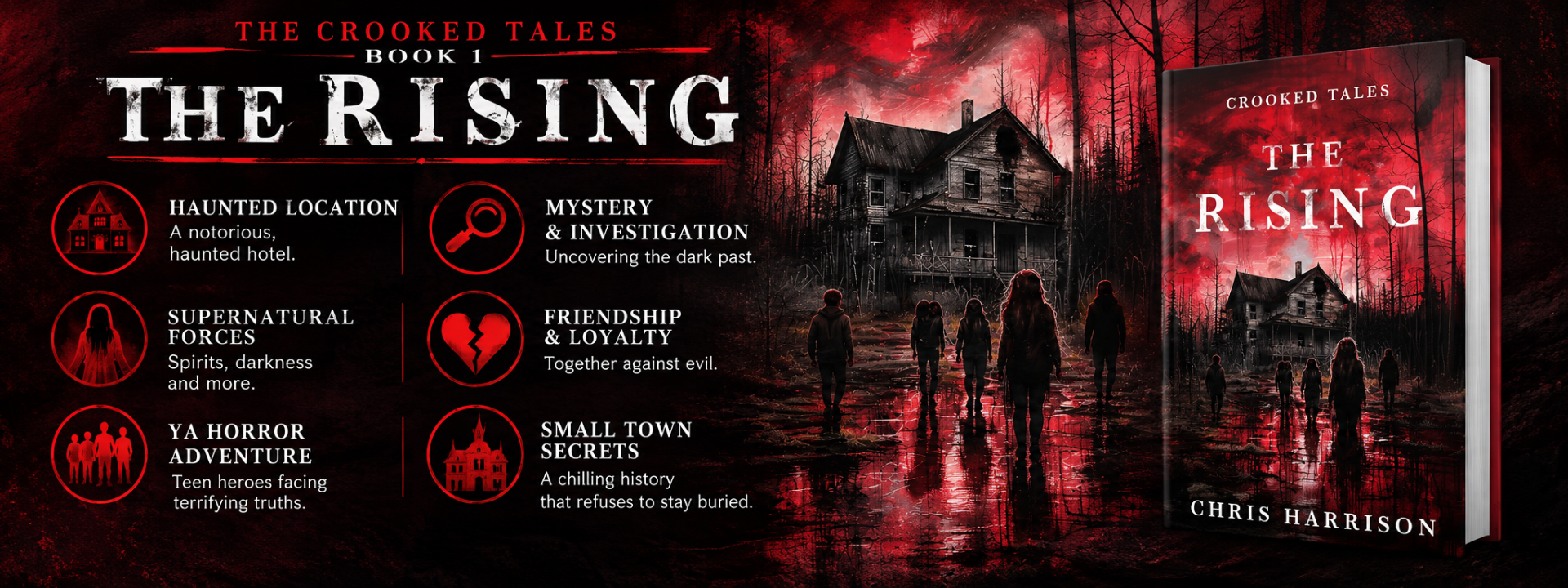
Books By Chris Harrison