Saul Sandoval (An Author Spotlight Interview)
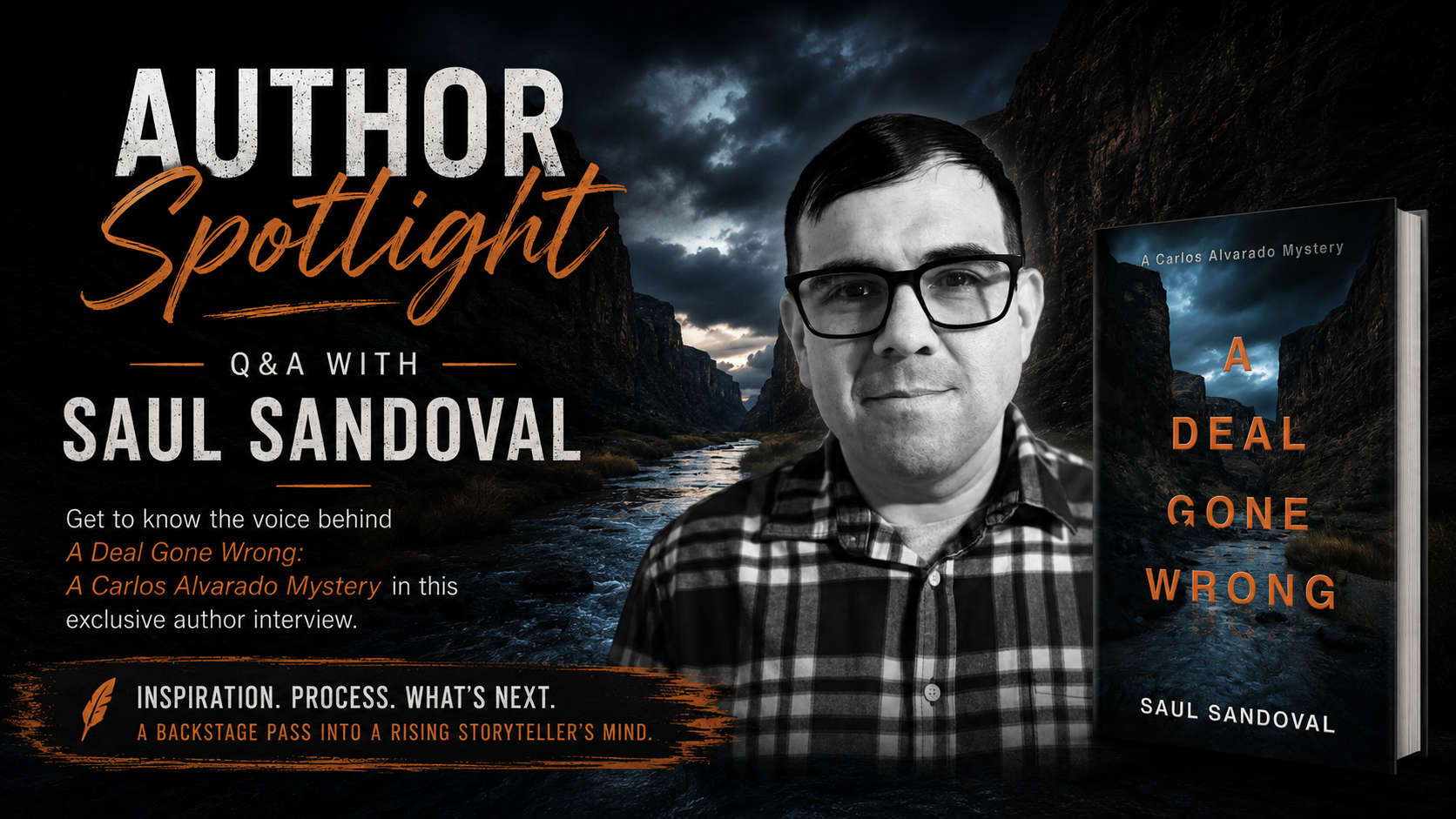
Saul Sandoval’s storytelling roots run deep in the Rio Grande Valley of South Texas, where his love for narrative first took shape. After studying Radio, Television, and Film at the University of North Texas and later earning his BA in English with a focus in Creative Writing, he never stopped chasing the stories that needed telling—especially those shaped by the culture and community he calls home.
His debut mystery novel, A Deal Gone Wrong: A Carlos Alvardo Mystery, hit shelves on May 20, 2025, launching a gripping trilogy full of twists, danger, and deeply human stakes. With the sequels set to release in the years ahead, Sandoval is also diving into darker territory with a chilling standalone novel inspired by a real haunted hotel, where a fiction writer’s search for inspiration takes a terrifying turn.
We’re thrilled to feature Saul in this author spotlight interview, offering readers a chance to get to know the voice behind the mystery. From creative influences to what’s coming next, this is your backstage pass into the mind of a rising storyteller.
Keep reading as we delve deeper into Saul Sandoval’s inspirations, experiences, and creative process, offering readers a chance to get to know the author behind “A Deal Gone Wrong: A Carlos Alvardo Mystery”.
1. Can you tell us a bit about yourself and your journey as a writer?
I started writing when I was in middle school but didn’t really take it seriously until I left high school and went to the University of Texas Brownsville and majored in English with a minor in Creative Writing. It was there that I met the professor that really sparked my interest in writing and pushed me to write my first of short stories and help me publish them in the college newspaper. From there I got the writing bug and it was all up hill from there. I never stopped.
2. What inspired you to start writing, and how did you discover your passion for storytelling?
My inspiration comes from the place I call home, the Rio Grande Valley and its people. We have such a rich border culture and warm people that it isn’t hard to be inspired by them. My passion for storytelling comes from the everyday lives I see all around me. It is those hardworking people that I love to write about and put front and center in my writing.
3. Could you share some insights into your creative process? Do you have any rituals or habits that help you write?
I am a stickler for the habits I have in my process. Usually when I am writing a new novel, I like to begin the first couple of weeks with just brainstorming ideas on actual pen and paper, nothing fancy, just an idea here or maybe character sketches. Once I have a general idea of what I’d like to accomplish then I move on to my computer and beginning the process of writing an outline. My outlines tend to be detailed and can be lengthy but its with purpose. The outline is a beat for beat of the story. Once that is complete, then and only then I can begin to write my first draft, using my outline as my guide. From there its pretty quick. I like to write daily, at least 500-1000 words a day with a day off during the week. Like I said, I’m a stickler.
4. What themes or messages do you often explore in your writing, and why are they important to you?
I am a stickler for the habits I have in my process. Usually when I am writing a new novel, I like to begin the first couple of weeks with just brainstorming ideas on actual pen and paper, nothing fancy, just an idea here or maybe character sketches. Once I have a general idea of what I’d like to accomplish then I move on to my computer and beginning the process of writing an outline. My outlines tend to be detailed and can be lengthy but its with purpose. The outline is a beat for beat of the story. Once that is complete, then and only then I can begin to write my first draft, using my outline as my guide. From there its pretty quick. I like to write daily, at least 500-1000 words a day with a day off during the week. Like I said, I’m a stickler.
5. Are there any particular authors or books that have influenced your writing style or storytelling approach?
That is a tough question but if I had to narrow it down to a few authors, I would say that Kimi Cunningham Grant, Jay Bell, and Andy Weir. Grant for her elegant pacing of her storytelling. Bell for his amazing characters and deep love for the world he created. Weir for his technical prowess in his use of scientific knowledge. It still amazes me to this day. I have a little bit of them in me.
6. Do you have any advice for aspiring writers who are just starting their journey?
I would say first decide on what kind of writer you would like to become. Are you interested in writing romance novels, mystery fiction, science fiction, or any other genre. If you are not sure, then start by finding authors that you enjoy reading and begin from there. If writing a novel seems daunting, then start with a short story to get your creative juices flowing. I’ve had a few ideas start off as short stories that end up becoming ideas for novels. So, you just never know.
7. How do you balance writing with other aspects of your life, such as work, family, and personal interests?
This was something I had to work hard at to find the right balance. For me, I work a 9-5 job Monday-Friday, followed by an hour of working out, then a couple hours of online graduate school, and an hour working on various writing projects. Once I have completed my mandatory items, then and only then do I allow myself free time to watch tv, read, etc. which usually amounts to a few hours before I have to go to bed before midnight to start the process all over again. It seems like a lot but it works for me and the consistent schedule helps keep me on track and focused.
8. How do you stay motivated and overcome writer's block when faced with challenges in your writing process?
Motivation can be hard, but writers block is something that I hardly encounter due to my detailed writing process that includes my outline. But in those instances when writers block occurs, I usually will put my project away and leave it alone for a couple of days and come back to it with a fresh set of eyes. Usually the change in perspective helps me look at the problem in a new light and helps me jumpstart my process. The key is to not get overwhelmed and to never give up on yourself.
9. How do you manage your time and set goals to ensure consistent progress in your writing projects?
Time management and goal setting is something I work hard at to maintain otherwise I would never stay on track. As I have previously mentioned, I set daily goals for my writing and set aside a certain amount of time to write daily as well. For example currently, I write daily at least an hour and during that time I try to accomplish a minimum of 500 words to a maximum of 1000 words. In doing so I am able to hit my weekly and monthly goals which can fluctuate depending on the project I am working on. This method allows for consistency in my projects.
10. How do you handle moments of doubt or uncertainty in your writing process, and what strategies do you use to persevere through challenges?
There are times when I am writing and I begin to doubt my character’s motivations or whether a certain plot point would work, etc. In those instances, I take the time to look back at what I have written and see if the motivation/plot point does indeed fit within the needed storyline and if it doesn’t then I adjust accordingly. I am never afraid to make changes. That is the hardest lesson I ever learned as writer. I thought once I had written a solid outline or rough draft of a novel that making changes would take away from the integrity of my creative process. I felt like I was cheating myself somehow. I was wrong. Don’t be afraid to make changes if it makes your story better. Its your story, only you know what’s best.
11. What role do emotions and empathy play in your writing, and how do you strive to evoke emotional responses from your readers?
They play a very large role in my writing. The majority of my storylines involve some sort of romantic element to them so of course emotions and empathy play a role in my writing. Ensuring that my characters seem authentic and evoke emotional responses from my readers is always high at the top of my list when I write. I try and accomplish this by writing characters that have deep backstories and have interconnected storylines. Sometimes I create character biographies for some of my more detailed storylines in order to ensure consistency and continuity.
12. Can you share any insights into the importance of a strong opening hook or first chapter in capturing readers' attention and setting the tone for the rest of the book?
If there is one thing a young writer can spend their time on practicing, it is their opening hook or the inciting incident that may or may not be in the first chapter. Regardless of the location it is the most important part of any story because it hooks your reader into your story and grabs their attention. It gives them a reason to continue reading and gets them invested in the story you are trying to tell. If you can hook them in early with good characters and a great storyline then you are more than halfway there.
13. Can you discuss any experiences of writer's block or creative burnout, and how do you rejuvenate your creativity during those times?
There have been times where I have felt completely burnt out on the entire process mainly due to my inability to take a break from my writing. Sometimes when I get so focused on a project and I feel that I am on a roll I am too afraid to stop for the fear of losing that spark. I have learned the hard way that burn out is far worse than the fear of losing any spark. I also found that taking breaks doesn’t mean I will lose any creative spark, in fact it can help a great deal. So when I feel drained or burned out I force myself to take a break from writing for a few days at least and do something completely opposite from it. I might go camping, fishing or something outdoors. That usually does the trick and when I come back I return refreshed and usually with a ton of new ideas.
14. Are there any upcoming projects or future plans that you're excited to share with your readers?
After the release of my debut novel A Deal Gone Wrong: A Carlos Alvardo Mystery on May 20, 2025 I do have the sequels coming out the subsequent years as well. It’s a trilogy. So everyone has that to look forward to. Beyond that I am also working on a stand alone novel based on a local haunted hotel and a fiction writer who goes to investigate it as part of the book he’s writing where things go awfully wrong.
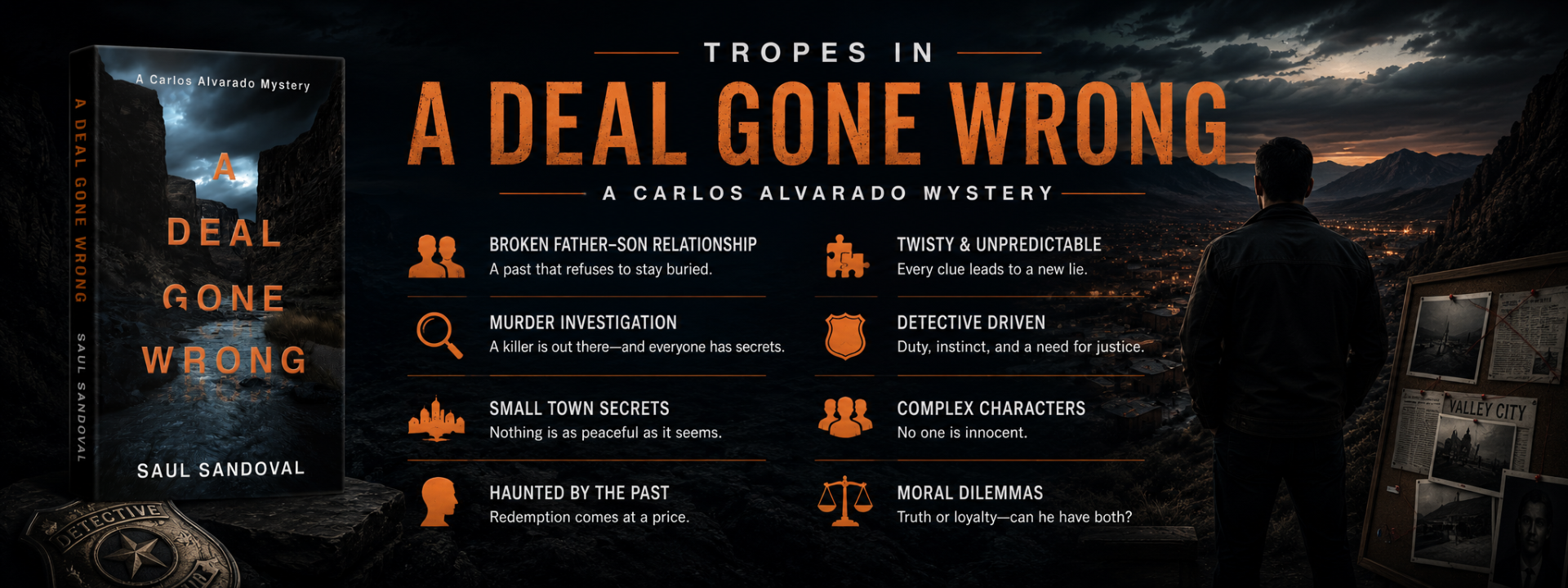
Books By Saul Sandoval