Waverly O’Brian (An Author Spotlight Interview - April 2026)
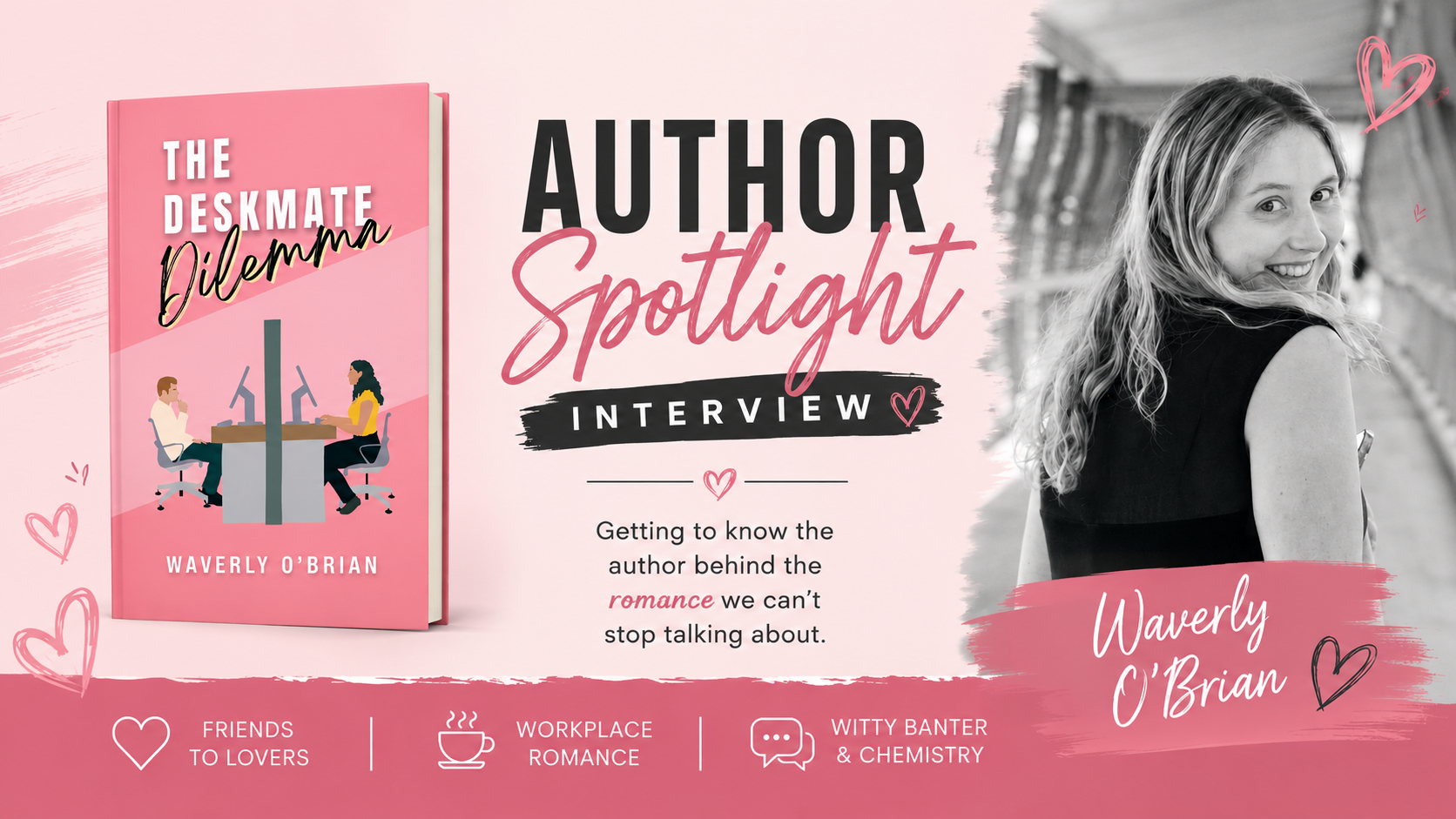
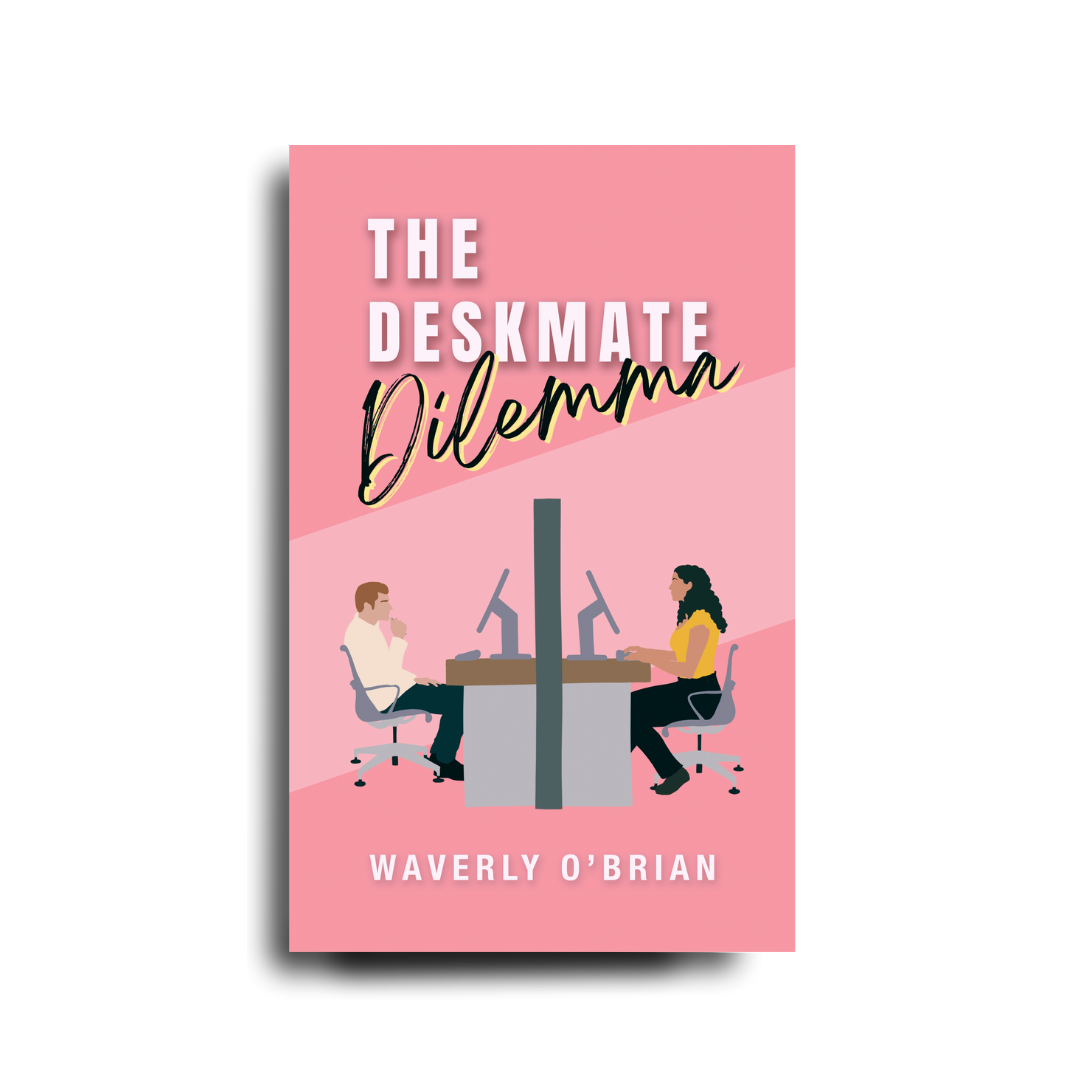
As stolen glances turn into something impossible to ignore and friendship begins to teeter on the edge of something more, Waverly O’Brian makes a striking debut with The Deskmate Dilemma, a contemporary romance that leans into the tension, the longing, and the quiet, heart-racing moments that define falling in love when you least expect it. Set against the familiar backdrop of office life, her story transforms the everyday into something electric, where late-night conversations, inside jokes, and almost-confessions carry the kind of weight that changes everything. With a natural instinct for emotional pacing and a sharp eye for the moments that matter most, O’Brian captures the beauty of connection in a way that feels both intimate and irresistibly real.
Drawing from her creative roots in fine art and a lifelong love of storytelling, her writing is grounded in the idea that the most powerful love stories are often the ones that feel closest to home. Influenced by the character-driven charm of Rick Riordan and the swoon-worthy emotional depth of Ali Hazelwood and Katherine Center, O’Brian brings a fresh, heartfelt voice to the genre, one that embraces vulnerability, celebrates chemistry, and understands the risk of crossing the line between friendship and something more.
In this exclusive Author Spotlight, Waverly opens up about the unexpected journey that led her to romance, the discipline behind her creative process, and the passion that drives her to tell stories filled with love, identity, and the courage to take that first leap. It’s a conversation as warm and genuine as her writing, one that reminds us that sometimes, the best love stories are the ones we never saw coming.
Step into the slow burn with Waverly O’Brian as we explore the spark, the tension, and the heart behind her debut, uncovering how fleeting moments, unspoken feelings, and the risk of crossing the line between friendship and love come together to create a romance that lingers long after the final page.
1. Can you tell us a bit about yourself and your journey as a writer?
As a kid, my least favourite thing in school was ironically creative writing (although this could be tied with gym class), so this was a very unexpected turn for me. I’ve always been a reader. Someone who devours stories like they’re air, but it wasn’t until I had a teacher who really believed in my writing potential in high school, that I found myself enjoying it. At first, I thrived writing essays and reports. Plugging in the formulas of writing and getting high grades in return, but as I continued along in my reading journey, I started wanting more. I started seeing the potential in my own ideas. The hurdle was figuring out how to get them onto paper. Once I decided writing was something I wanted to do, there was no stopping me. In university, I studied Fine Art, specifically painting, and as my creativity blossomed in that environment, so did my desire to write. I started choosing the classes in school that allowed me to do research papers rather than exams, and as my academic writing became stronger, I decided to try my hand at creative writing.
2. What inspired you to start writing, and how did you discover your passion for storytelling?
Writing started off as a COVID project for me. As my desire to write surfaced, it took me a while to figure out exactly how crafting a story works. I started off writing a fantasy book. Spending time each and every morning writing something, even if it wasn’t very good. I never fully finished that book, but it gave me a new appreciation for crafting stories, and made me realize how much I wanted to be an author. I decided to switch routes and began working on a romance novel, now The Deskmate Dilemma, which I found came a lot more naturally to me. I think for me, telling stories of regular people in our contemporary world is the best place to start. ‘Write what you know’ is advice I’ve heard countless times, and what I know is the beauty of a regular life, along with my own desire to bring happy endings to our world.
3. Could you share some insights into your creative process? Do you have any rituals or habits that help you write?
My creative process often starts with a random strange thought. Sometimes from a dream, often from an experience and my mind will turn it over and over again. These ideas grow into their own tangible things that I come back to time and time again. I then plan out the basics of the story, and give myself the freedom to change things as I go.
The main habit that I find the most effective is writing five days a week, aiming for between 500 and 1000 words a day. I think having a few specific days off a week really helps me avoid burning out, and having a flexible word count to aim for gives me permission to have both productive and unproductive days.
4. What themes or messages do you often explore in your writing, and why are they important to you?
My writing themes often revolve around identity and unsurprisingly, love. My characters struggle through regular life, trying to find where they fit in the world and trying to figure out what people fit with them. I think as humans, these are two of the biggest things we explore; figuring out who we are and figuring out how that fits into our own idea of what love is.
5. Are there any particular authors or books that have influenced your writing style or storytelling approach?
As a kid I thought I would marry Percy Jackson. I absolutely loved Rick Riordan’s writing style, and his characters. As I got older, I started reading a larger variety of genres and fell in love with romance and romantasy. I think Ali Hazelwood and Kathrine Center are my favourite romance authors currently, but in all honesty, I love too many authors to count!
6. Do you have any advice for aspiring writers who are just starting their journey?
I think my best advice is to read the type of books you want to write. Then, once you have an idea, just write it. Start off small, with whatever scene you can picture the best (for me it’s usually the argument scenes!) and just do that. It might be terrible at first, but a terrible first try is much better than never trying! That’s what editing’s for later anyways.
7. How do you balance writing with other aspects of your life, such as work, family, and personal interests?
For my stage of life right now, I actually have quite a bit of time to work on these types of projects. I have a regular day job with specific hours, and I typically write either right before work or right after. That way I’m still kind of in a ‘work mode.’ I think the struggle for me is balancing my spare time between my different hobbies (as a crafter, fine artist and general creative person, I have a lot!)
I always prioritize my time with friends and family, and look forward to family dinners on Sundays and watching Survivor on Wednesday with my parents. I thrive on routines and in the end, a lot of time I used to spend doom scrolling has switched over to writing and thinking about book things. Overall, I think it’s been an incredible shift in my life and has made me more imaginative and most importantly, more happy (especially in the long, cold Canadian winters!).
8. How do you stay motivated and overcome writer's block when faced with challenges in your writing process?
My writing process is kind of all over the place! I don’t write in chronological order which means when I’m not feeling a scene, I just switch to a different one. If a scene just isn’t working, I let myself move onto something else and then come back to it later with fresh eyes. Often any issues end up working themselves out, or while I’m working on a different portion, I’ll have an idea and jump back to that problematic section. It’s the same way I used to take tests in school, and it’s the same way I paint paintings; organized chaos keeps me motivated!
9. How do you manage your time and set goals to ensure consistent progress in your writing projects?
I am, and will always be a numbers girl. I love spreadsheets and graphs, and tracking my writing is no different. I will set a range for my daily word count goal for a book and graph them, then add in a column where I graph days vs. words written. This way I can very easily and visually see at the end of each day whether I’m on track for my projected timeline. I know this strategy doesn’t work for some writers, but for me, having a daily numerical goal helps motivate me and allows me to visually see my progress towards the overall goal.
10. How do you handle moments of doubt or uncertainty in your writing process, and what strategies do you use to persevere through challenges?
Imposter Syndrome is very, very real. It’s hard to get past the persistent thoughts of: ‘I’m just not good enough,’ ‘not a good enough writer,’ ‘not a good enough editor,’ ‘not a good enough story teller.’ The negative thoughts and doubts can be overwhelming at times and I think the only way to get through it is to just keep trucking along. To have the courage to know that not everyone will like your work, but that someone, somewhere, might just love it. I also think it’s important to talk to your friends and family who are supporting you through your journey. Writing can be a very isolating, lonely activity. You can accidentally spend all your time in your internal world, or comparing yourself to other authors, so it’s important to sit down with your cheerleaders and lend strength and encouragement from them.
11. What role do emotions and empathy play in your writing, and how do you strive to evoke emotional responses from your readers?
The books I remember the most vividly are the ones that make me have an external reaction; crying from an emotional scene, kicking up my feet and giggling at a swoon worthy moment, raising my eyebrows at a truly shocking twist. Empathy is the key ingredient in making these moments happen for readers. They need to feel like they are right there in the moment with the characters, feeling their feelings and truly immersed in the world. I want more than anything for my books to bring these moments to readers, and I hope that as I continue to hone my craft, they will just get more and more numerous in my writing!
12. Can you share any insights into the importance of a strong opening hook or first chapter in capturing readers' attention and setting the tone for the rest of the book?
Writing the first chapter is so challenging. I often write it near the beginning of my writing process, but end up scrapping it and rewriting it several times afterwards. You want to throw the reader into the world so forcefully that they have no choice but to keep reading. You want them to be as immersed as possible, as quickly as possible, so they are ready to stick with it. I’m still learning about how to do this best, but I find myself much more cognizant of when it happens to me as a reader now, and try to take notes for my own writing!
13. Can you discuss any experiences of writer's block or creative burnout, and how do you rejuvenate your creativity during those times?
For me, getting past creative burnout is usually about getting re-inspired. As an artist, this is something that happens regularly in my art practice, and when I feel that creative block coming on, I like going and looking at art. Finding inspiration that makes me think, “hey, I can do that.” Writing is no different. When I feel myself drifting into a slump, I’ll pick up a book and give myself permission to just read. To enjoy it.
14. Are there any upcoming projects or future plans that you're excited to share with your readers?
So many! I sometimes have to remind myself that my writing career is a marathon, not a sprint, but truthfully, I have years and years and years of stories ready and waiting for me to have the time and energy to finish writing them. I have my first six books planned, and a document of over twenty pages with probably at least a hundred other ideas as well! Not all of these will be written (probably not most of them!) but life is exciting and inspiring and I hope one day when major writers block hits, I can look back at this time in my life and remember just how much joy the potential of these ideas gave me.
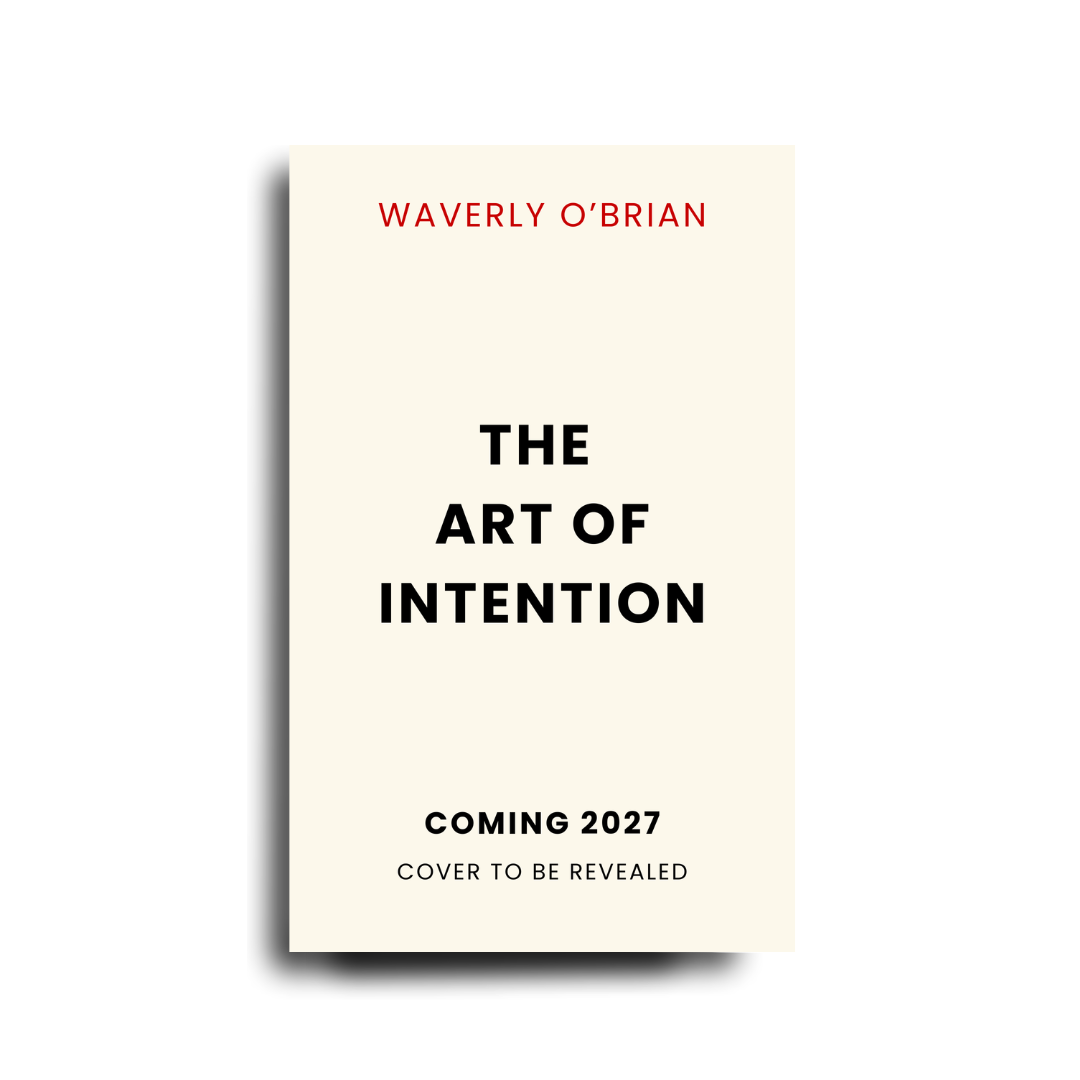
In the near future, my second novel, The Art of Intention will be released in July 2027!
I have also finished the first draft of my third book and am hoping that it will be released sometime in 2028.
Books By Waverly O’Brian